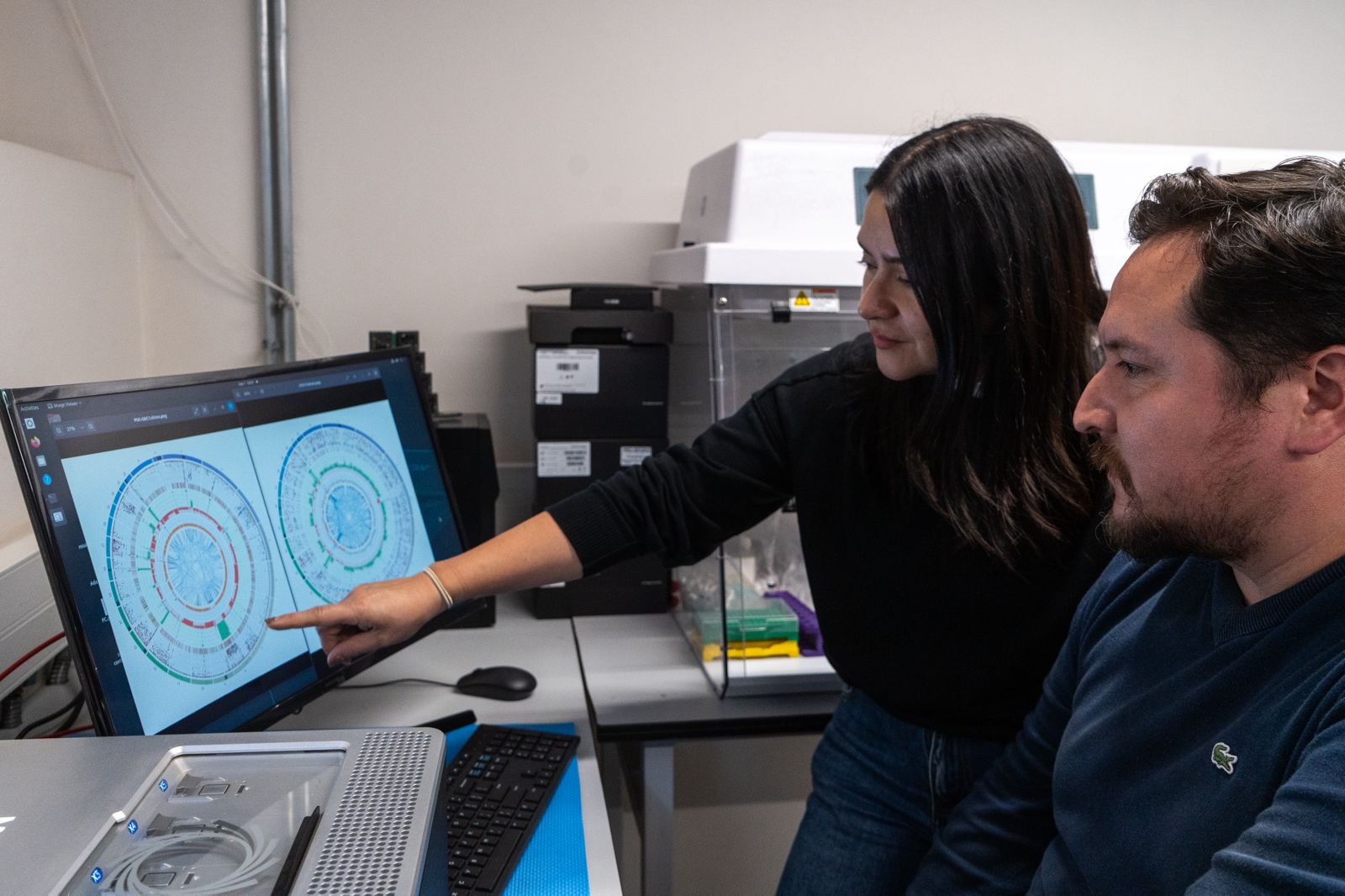
Instituto de Ciencias de la Ingeniería (ICI)

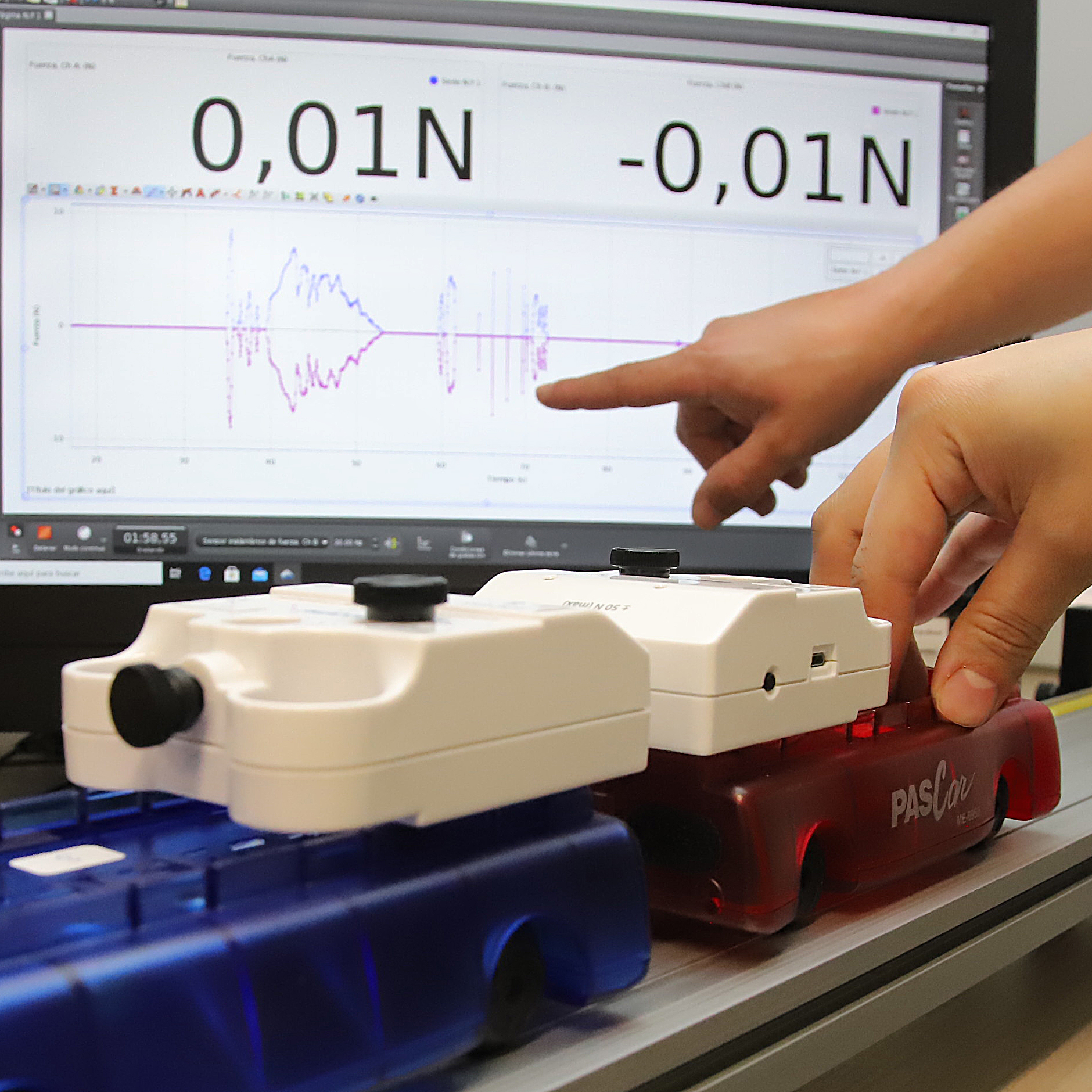
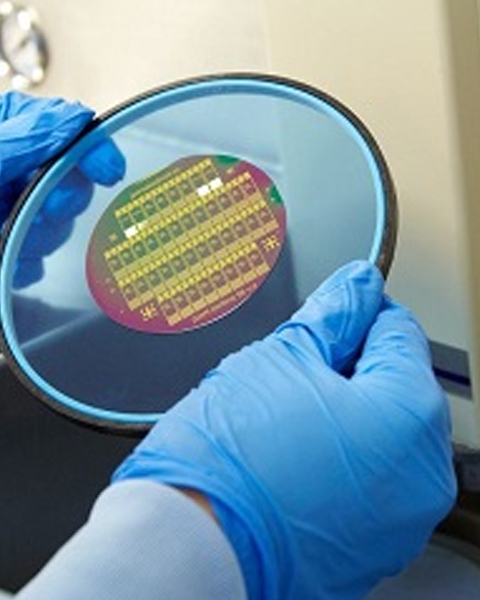
El Instituto de Ciencias de la Ingeniería tiene como misión principal el desarrollo de investigación de punta en áreas relacionadas con las ciencias físicas y matemáticas, las ciencias aplicadas y las ciencias de la ingeniería en sus diversos ámbitos, en un contexto de trabajo multidisciplinario e interdisciplinario.

Tiene como foco las problemáticas provenientes de la Región del Libertador Bernardo O’Higgins, generando conocimiento y desarrollo tecnológico con una proyección global. En particular el Instituto busca una fuerte interacción con las principales áreas productivas de la región, incluyendo la agroindustria y la minería, entre otras. Junto con esto, la vinculación con el medio juega un rol crucial, incluido el continuo trabajo con los múltiples actores regionales, y la divulgación y transferencia de su quehacer investigativo en el ámbito social y productivo.

Noticias

Viernes 30, Enero

InES Género UOH culmina con éxito curso de Liderazgo Científico para Mujeres Investigadoras 2025

En la ceremonia de cierre se reconoció a las 16 académicas e investigadoras postdoctorales que participaron de esta instancia formativa, que busca fortalecer habilidades clave para el desarrollo de sus carreras científicas.

Saber más
Lunes 19, Enero

Más diálogo y prevención para consolidar un entorno de confianza

La visita académica permitió vincular los contenidos del curso Modelo de Desarrollo Regional con iniciativas reales de innovación, sostenibilidad y articulación público-privada impulsadas a nivel nacional.

Saber más
Jueves 15, Enero

Congreso Futuro realizado en la UOH abarcó reflexiones sobre inclusión, cooperativismo e inteligencia artificial

La jornada convocó miradas interdisciplinarias vinculando conocimiento, territorio y desafíos contemporáneos desde una perspectiva pública y abierta a la comunidad.

Saber más

538

Publicaciones
Todos

218

Proyectos
Todos

102

Proyectos
En Ejecución

Proyectos

  • PYT-2026-186
  • Abril 2026 - Marzo 2029
AdjudicadoFundación para la Innovación Agraria - FIA

Obtención de ingredientes funcionales desde pulpa de sandía residual post cosecha para su uso en la industria de alimentos funcionales y en la agricultura

[vc_section el_class="container mx-auto align-items-center circle--pattern" css=".vc_custom_1648956589196{padding-top: 3rem !important;}"][vc_row el_class="pb-5"][vc_column][vc_wp_custommenu nav_menu="6"][uoh_breadcrumb_component automatic_breadcrumb="true"][uoh_title_component title_dropdown="big" title_decorator="true"]{{title}}[/uoh_title_component][vc_column_text css=""]La producción de semillas de sandía en Chile es una de las que genera mayores volúmenes (12,5%) y mejores precios (26 MM U$FOB) de exportación respecto del total de semillas exportadas. En los últimos 5 años su exportación ha aumentado considerablemente ocupando el segundo lugar en este mercado. Derivado del procesamiento de los frutos se genera un alto porcentaje de pulpa y cáscara; residuos no aprovechables como subproducto para otras industrias como cuarta gama y/o farmacéutica. El elevado contenido antioxidantes de la sandía representa una oportunidad para su extracción y uso en otras industrias. La solución innovadora permitirá reutilizar grandes volúmenes de la pulpa y cáscara, mitigando su disposición inadecuada y mejorando prácticas agrícolas y biotecnológicas. El objetivo de la propuesta es desarrollar un paquete tecnológico consistente en tres aplicaciones que permiten valorizar los residuos de cáscara y pulpa de sandía para la producción de nutracéuticos, bioenmienda de suelos provenientes de relaves mineros, y sustrato para el crecimiento de microorganismos. El proyecto busca generar innovaciones que promuevan la transformación de los residuos agrícolas, proyectando así nuevos negocios para los productores hortícolas en la industria de los alimentos dando valor agregado a los residuos derivados del procesamiento de semillas. Los resultados esperados de esta iniciativa son: Portafolio de al menos 2 ingredientes funcionales (Licopeno y Citrulina) desarrollados y caracterizados; validación técnica del ingrediente principal (Licopeno o citrulina) con actividad antioxidante; bioenmienda validada en un entorno operacional (campo), alcanzando el nivel de madurez tecnológica TRL7; análisis de mercado robusto que incluye un plan de escalamiento técnico de la bioenmienda; medio de cultivo validado en un entorno operacional (empresas), alcanzando el nivel de madurez tecnológica TRL7; y análisis de mercado robusto que incluye un plan de escalamiento técnico.[/vc_column_text][/vc_column][/vc_row][/vc_section][vc_section css=".vc_custom_1649209804184{background-color: #f6faff !important;}" el_class="p-md-0 pt-md-5"][vc_row el_class="container mx-auto align-items-center p-md-0 pt-5"][vc_column el_class="p-0"][/vc_column][/vc_row][/vc_section][vc_section css=".vc_custom_1649210787516{background-color: #f6faff !important;}" el_class="p-md-0 pt-md-5 pb-md-5"][vc_row el_class="container mx-auto align-items-center"][vc_column][/vc_column][/vc_row][/vc_section]
Responsable Alterno
  • 11261116
  • Abril 2026 - Marzo 2029
AdjudicadoAgencia Nacional de Investigación y Desarrollo - ANID

Cooperative control of intelligent agents using reinforcement learning to support the implementation of AC/DC multi-microgrids in the energy industry, from regions in Chile to the rest of the world.

[vc_section el_class="container mx-auto align-items-center circle--pattern" css=".vc_custom_1648956589196{padding-top: 3rem !important;}"][vc_row el_class="pb-5"][vc_column][vc_wp_custommenu nav_menu="6"][uoh_breadcrumb_component automatic_breadcrumb="true"][uoh_title_component title_dropdown="big" title_decorator="true"]{{title}}[/uoh_title_component][vc_column_text css=""]This project will address the implementation of distributed controllers in intelligent agents within AC/DC electrical microgrids. Specifically, this project will address open issues in the distributed control literature for microgrids; these include optimal parameter tuning and resilience to communications disturbances such as transport delays, packet loss, and communication failures due to cyberattacks. All of these are important components that prevent the proliferation of microgrid projects throughout the country and the world. Microgrids have the potential to improve the energy management of renewable resources and the resilience of current and future electrical systems. Furthermore, they aid in decarbonization and benefit the energization of isolated communities and national industries. Based on the above, the main objective of this research is to formulate, implement, and validate distributed intelligent controllers, using reinforcement learning, in agents that comprise interconnected AC/DC microgrids, in order to achieve optimal operation concerning available energy resources despite disturbances and failures in communication channels. To achieve this objective, the following specific objectives are specified: (i) investigate the state of the art in the use of reinforcement learning algorithms in cooperative multi-agent system control and their application to microgrids; (ii) design a deep reinforcement learning algorithm to auxiliary control an ILC of a hybrid AC/DC microgrid with communication loss and variable time delays; (iii) design a distributed controller with parameter and structure adjustment capability through deep reinforcement learning algorithms for the agents of an AC/DC multi-microgrid with communication losses and variable time delay; (iv) design a robust distributed controller through deep reinforcement learning algorithms that allows agents in an AC/DC multi-microgrid to be resilient to heterogeneous and variable transport delays, loss of data packets, and DoS cyber-attacks; (v) build a prototyping platform for multi-agent-based intelligent agent control schemes with digital twin co-simulation; (vi) implement and validate the proposed reinforcement learning controllers in an AC/DC multi-microgrid experimental setup.[/vc_column_text][/vc_column][/vc_row][/vc_section][vc_section css=".vc_custom_1649209804184{background-color: #f6faff !important;}" el_class="p-md-0 pt-md-5"][vc_row el_class="container mx-auto align-items-center p-md-0 pt-5"][vc_column el_class="p-0"][/vc_column][/vc_row][/vc_section][vc_section css=".vc_custom_1649210787516{background-color: #f6faff !important;}" el_class="p-md-0 pt-md-5 pb-md-5"][vc_row el_class="container mx-auto align-items-center"][vc_column][/vc_column][/vc_row][/vc_section]
Investigador/a Responsable
  • 40074458-0
  • Marzo 2026 - Marzo 2028
AdjudicadoGobierno Regional - GORE

Rutas de turismo paleoarqueológicas para la Región de O`higgins

[vc_section el_class="container mx-auto align-items-center circle--pattern" css=".vc_custom_1648956589196{padding-top: 3rem !important;}"][vc_row el_class="pb-5"][vc_column][vc_wp_custommenu nav_menu="6"][uoh_breadcrumb_component automatic_breadcrumb="true"][uoh_title_component title_dropdown="big" title_decorator="true"]{{title}}[/uoh_title_component][vc_column_text css=""]Implementación de una ruta de turismo arqueológica y paleontológica que abarque tres comunas: San Vicente de Tagua Tagua, Navidad y San Fernando.[/vc_column_text][/vc_column][/vc_row][/vc_section][vc_section css=".vc_custom_1649209804184{background-color: #f6faff !important;}" el_class="p-md-0 pt-md-5"][vc_row el_class="container mx-auto align-items-center p-md-0 pt-5"][vc_column el_class="p-0"][/vc_column][/vc_row][/vc_section][vc_section css=".vc_custom_1649210787516{background-color: #f6faff !important;}" el_class="p-md-0 pt-md-5 pb-md-5"][vc_row el_class="container mx-auto align-items-center"][vc_column][/vc_column][/vc_row][/vc_section]
Investigador/a Responsable
  • 40074458-0
  • Marzo 2026 - Marzo 2028
AdjudicadoGobierno Regional - GORE

Rutas de turismo paleoarqueológicas para la Región de O`higgins

[vc_section el_class="container mx-auto align-items-center circle--pattern" css=".vc_custom_1648956589196{padding-top: 3rem !important;}"][vc_row el_class="pb-5"][vc_column][vc_wp_custommenu nav_menu="6"][uoh_breadcrumb_component automatic_breadcrumb="true"][uoh_title_component title_dropdown="big" title_decorator="true"]{{title}}[/uoh_title_component][vc_column_text css=""]Implementación de una ruta de turismo arqueológica y paleontológica que abarque tres comunas: San Vicente de Tagua Tagua, Navidad y San Fernando.[/vc_column_text][/vc_column][/vc_row][/vc_section][vc_section css=".vc_custom_1649209804184{background-color: #f6faff !important;}" el_class="p-md-0 pt-md-5"][vc_row el_class="container mx-auto align-items-center p-md-0 pt-5"][vc_column el_class="p-0"][/vc_column][/vc_row][/vc_section][vc_section css=".vc_custom_1649210787516{background-color: #f6faff !important;}" el_class="p-md-0 pt-md-5 pb-md-5"][vc_row el_class="container mx-auto align-items-center"][vc_column][/vc_column][/vc_row][/vc_section]
Investigador/a Responsable
  • Marzo 2026
AdjudicadoUniversidad de O'Higgins

From Physics to Agricultural Practice: The impact of raindrops on Pseudomonas syringae pv syringae inoculated on sweet cherry leaves

[vc_section el_class="container mx-auto align-items-center circle--pattern" css=".vc_custom_1648956589196{padding-top: 3rem !important;}"][vc_row el_class="pb-5"][vc_column][vc_wp_custommenu nav_menu="6"][uoh_breadcrumb_component automatic_breadcrumb="true"][uoh_title_component title_dropdown="big" title_decorator="true"]{{title}}[/uoh_title_component][vc_column_text css=""]We investigate how rain-mediated mechanical processes influence the spread of pathogens under field conditions. While it is well established that water is a primary vector for bacterial movement between plants, few studies have examined the detailed hydrodynamic mechanisms involved, particularly in the context of leaf morphology, surface roughness, and microbial adhesion. This gap restricts our ability to develop predictive models and preventive strategies for managing rain-borne plant diseases. The project's general objective is to elucidate the coupling between raindrop impact dynamics and bacterial dispersal patterns on cherry leaves under realistic rainfall conditions. Specifically, it aims to (i) characterize the mechanical interaction between raindrops and cherry leaves using high-speed imaging and physical analysis to observe the dispersal patterns of Pseudomonas syringae pv. syringae (Pss). (ii) evaluate the spatial dispersal of Pss inoculated artificially onto cherry leaves at different concentrations under controlled temperature and rainfall conditions, and (iii) develop an integrative predictive model based on physical variables of rain-leaf interaction and experimentally measured environmental conditions to estimate the dispersal and severity of Pss attack. Methodologically, our study combines high-speed photography, controlled laboratory rain simulations, and microbiological assays. We will perform experiments in a custom-designed rainfall simulator allowing precise control of droplet size, velocity, and impact angle. Bacterial suspensions of Pseudomonas syringae—a pathogen commonly associated with cherry canker—will be applied to leaves under standardized conditions. The dynamics of droplet impact, splash formation, and secondary droplet ejection will be recorded at high temporal resolution to quantify mechanical energy transfer and spatial distribution of splashed particles. Parallel microbiological analyses will determine bacterial survival rates, concentration profiles, and the extent of leaf-to-leaf contamination. We will integrate these results into a predictive model linking rainfall characteristics to potential bacterial dispersal distances and infection probabilities. We aim to enhance our understanding of the biophysical coupling between rainfall and pathogen mobility, establish a set of empirical relationships for disease spread modeling, and provide practical recommendations for orchard management under varying climatic scenarios. By bridging the gap between plant pathology and fluid mechanics, this project will provide a mechanistic foundation for reducing rain-mediated bacterial diseases in high-value fruit crops, contributing to the sustainability and resilience of O'Higgins agriculture.[/vc_column_text][/vc_column][/vc_row][/vc_section][vc_section css=".vc_custom_1649209804184{background-color: #f6faff !important;}" el_class="p-md-0 pt-md-5"][vc_row el_class="container mx-auto align-items-center p-md-0 pt-5"][vc_column el_class="p-0"][/vc_column][/vc_row][/vc_section][vc_section css=".vc_custom_1649210787516{background-color: #f6faff !important;}" el_class="p-md-0 pt-md-5 pb-md-5"][vc_row el_class="container mx-auto align-items-center"][vc_column][/vc_column][/vc_row][/vc_section]
Investigador/a Responsable
  • Marzo 2026
AdjudicadoUniversidad de O'Higgins

From Physics to Agricultural Practice: The impact of raindrops on Pseudomonas syringae pv syringae inoculated on sweet cherry leaves

[vc_section el_class="container mx-auto align-items-center circle--pattern" css=".vc_custom_1648956589196{padding-top: 3rem !important;}"][vc_row el_class="pb-5"][vc_column][vc_wp_custommenu nav_menu="6"][uoh_breadcrumb_component automatic_breadcrumb="true"][uoh_title_component title_dropdown="big" title_decorator="true"]{{title}}[/uoh_title_component][vc_column_text css=""]We investigate how rain-mediated mechanical processes influence the spread of pathogens under field conditions. While it is well established that water is a primary vector for bacterial movement between plants, few studies have examined the detailed hydrodynamic mechanisms involved, particularly in the context of leaf morphology, surface roughness, and microbial adhesion. This gap restricts our ability to develop predictive models and preventive strategies for managing rain-borne plant diseases. The project's general objective is to elucidate the coupling between raindrop impact dynamics and bacterial dispersal patterns on cherry leaves under realistic rainfall conditions. Specifically, it aims to (i) characterize the mechanical interaction between raindrops and cherry leaves using high-speed imaging and physical analysis to observe the dispersal patterns of Pseudomonas syringae pv. syringae (Pss). (ii) evaluate the spatial dispersal of Pss inoculated artificially onto cherry leaves at different concentrations under controlled temperature and rainfall conditions, and (iii) develop an integrative predictive model based on physical variables of rain-leaf interaction and experimentally measured environmental conditions to estimate the dispersal and severity of Pss attack. Methodologically, our study combines high-speed photography, controlled laboratory rain simulations, and microbiological assays. We will perform experiments in a custom-designed rainfall simulator allowing precise control of droplet size, velocity, and impact angle. Bacterial suspensions of Pseudomonas syringae—a pathogen commonly associated with cherry canker—will be applied to leaves under standardized conditions. The dynamics of droplet impact, splash formation, and secondary droplet ejection will be recorded at high temporal resolution to quantify mechanical energy transfer and spatial distribution of splashed particles. Parallel microbiological analyses will determine bacterial survival rates, concentration profiles, and the extent of leaf-to-leaf contamination. We will integrate these results into a predictive model linking rainfall characteristics to potential bacterial dispersal distances and infection probabilities. We aim to enhance our understanding of the biophysical coupling between rainfall and pathogen mobility, establish a set of empirical relationships for disease spread modeling, and provide practical recommendations for orchard management under varying climatic scenarios. By bridging the gap between plant pathology and fluid mechanics, this project will provide a mechanistic foundation for reducing rain-mediated bacterial diseases in high-value fruit crops, contributing to the sustainability and resilience of O'Higgins agriculture.[/vc_column_text][/vc_column][/vc_row][/vc_section][vc_section css=".vc_custom_1649209804184{background-color: #f6faff !important;}" el_class="p-md-0 pt-md-5"][vc_row el_class="container mx-auto align-items-center p-md-0 pt-5"][vc_column el_class="p-0"][/vc_column][/vc_row][/vc_section][vc_section css=".vc_custom_1649210787516{background-color: #f6faff !important;}" el_class="p-md-0 pt-md-5 pb-md-5"][vc_row el_class="container mx-auto align-items-center"][vc_column][/vc_column][/vc_row][/vc_section]
Investigador/a Responsable

Publicaciones

  • REVISTA Journal of Logical and Algebraic Methods in Programming
  • 2026

Nominal Anti-Unification Modulo Equational Theories


• Alexander Baumgartner • Daniele Nantes-Sobrinho

http://dx.doi.org/10.1016/j.jlamp.2025.101100

  • REVISTA Wetlands Ecology and Management
  • 2026

Contribution of groundwater to wetland sustainability in arid Chile: an integrated hydrological, physicochemical, and isotopic approach


• Jaime G. Cuevas • Mercedes González‑Camaño • Ricardo Oyarzún • Etienne Samuel Bresciani • Pedro Hervé‑Fernández

http://dx.doi.org/10.1007/s11273-025-10107-7

  • REVISTA Chemical Geology
  • 2026

Experimental Ge/Si partitioning during organic-mediated silica precipitation


• Silvina Slagter

http://dx.doi.org/10.1016/j.chemgeo.2025.123156

  • REVISTA Fish & Shellfish Immunology
  • 2026

Pathogen coinfections in wild and farmed salmonids: A systematic review


• Débora Alejandra Torrealba Sandoval

http://dx.doi.org/10.1016/j.fsi.2026.111155

  • REVISTA Neurocomputing
  • 2025

Event-based optical flow: Method categorisation and review of techniques that leverage deep learning


• Robert Guaman Rivera • Jose Delpiano • Rodrigo Andrés Verschae Tannenbaum

http://dx.doi.org/10.1016/j.neucom.2025.129899

  • REVISTA 2025 IEEE 38th International Symposium on Computer-Based Medical Systems (CBMS)
  • 2025

Active Learning in Biomedical Text Classification Using a Bag-of-Regular-Expressions Approach


• Christopher Flores • Rodrigo Andrés Verschae Tannenbaum

http://dx.doi.org/10.1109/CBMS65348.2025.00051

Recursos

Descarga Documentos, Videos y Material disponible del instituto para uso público

Tipo de recurso :video

SCoPE Lab UOH

Tipo de recurso :video

Seminario de Electromovilidad 2024

Tipo de recurso :video

Aberraciones en comuna de Navidad

Tipo de recurso :video

Semana de la Ingeniería UOH 2024

Tipo de recurso :video

Semana de la Ingeniería 2023

Contacto

Instituto de Ciencias de la Ingeniería