Instituto de Ciencias de la Ingeniería (ICI)

El Instituto de Ciencias de la Ingeniería tiene como misión principal el desarrollo de investigación de punta en áreas relacionadas con las ciencias físicas y matemáticas, las ciencias aplicadas y las ciencias de la ingeniería en sus diversos ámbitos, en un contexto de trabajo multidisciplinario e interdisciplinario.

Tiene como foco las problemáticas provenientes de la Región del Libertador Bernardo O’Higgins, generando conocimiento y desarrollo tecnológico con una proyección global. En particular el Instituto busca una fuerte interacción con las principales áreas productivas de la región, incluyendo la agroindustria y la minería, entre otras. Junto con esto, la vinculación con el medio juega un rol crucial, incluido el continuo trabajo con los múltiples actores regionales, y la divulgación y transferencia de su quehacer investigativo en el ámbito social y productivo.


Noticias

Jueves 30, Abril

Comienza proceso de postulaciones al Premio For Women in Science 2026

La convocatoria, abierta entre el 22 de abril y el 28 de mayo de 2026, busca impulsar la trayectoria y aporte científico de investigadoras chilenas.

Saber más
Jueves 30, Abril

UOH conmemora Día Mundial de la Propiedad Intelectual destacando avances en protección

La Dirección de Transferencia e Innovación ha apoyado la protección de 21 resultados de investigación, concretado 11 solicitudes de patente, 12 registros de derechos de autor y 1 marca comercial.

Saber más
Miércoles 29, Abril

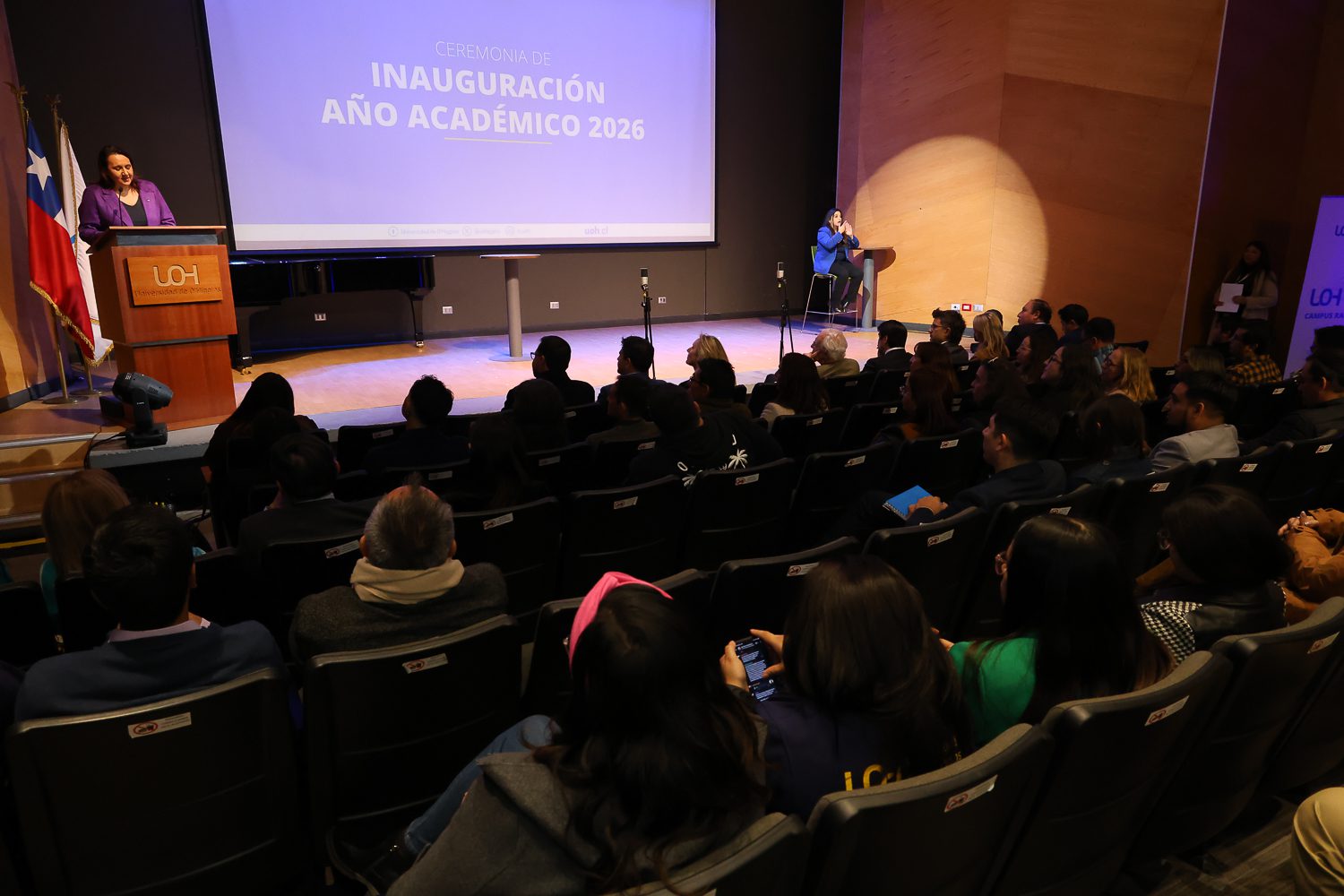
Reflexión universitaria: UOH inaugura Año Académico 2026 pensando en los desafíos de la Educación Superior

La ceremonia promovió el análisis acerca de los cambios educativos que se avecinan dentro de los procesos de formación universitaria ajustados a contextos digitales.

Saber más

548

Publicaciones
Todos

144

Proyectos
Todos

65

Proyectos
En Ejecución

Proyectos

  • PYT-2026-186
  • Abril 2026 - Marzo 2029
AdjudicadoFundación para la Innovación Agraria - FIA

Obtención de ingredientes funcionales desde pulpa de sandía residual post cosecha para su uso en la industria de alimentos funcionales y en la agricultura

[vc_section el_class="container mx-auto align-items-center circle--pattern" css=".vc_custom_1648956589196{padding-top: 3rem !important;}"][vc_row el_class="pb-5"][vc_column][vc_wp_custommenu nav_menu="6"][uoh_breadcrumb_component automatic_breadcrumb="true"][uoh_title_component title_dropdown="big" title_decorator="true"]{{title}}[/uoh_title_component][vc_column_text css=""]La producción de semillas de sandía en Chile es una de las que genera mayores volúmenes (12,5%) y mejores precios (26 MM U$FOB) de exportación respecto del total de semillas exportadas. En los últimos 5 años su exportación ha aumentado considerablemente ocupando el segundo lugar en este mercado. Derivado del procesamiento de los frutos se genera un alto porcentaje de pulpa y cáscara; residuos no aprovechables como subproducto para otras industrias como cuarta gama y/o farmacéutica. El elevado contenido antioxidantes de la sandía representa una oportunidad para su extracción y uso en otras industrias. La solución innovadora permitirá reutilizar grandes volúmenes de la pulpa y cáscara, mitigando su disposición inadecuada y mejorando prácticas agrícolas y biotecnológicas. El objetivo de la propuesta es desarrollar un paquete tecnológico consistente en tres aplicaciones que permiten valorizar los residuos de cáscara y pulpa de sandía para la producción de nutracéuticos, bioenmienda de suelos provenientes de relaves mineros, y sustrato para el crecimiento de microorganismos. El proyecto busca generar innovaciones que promuevan la transformación de los residuos agrícolas, proyectando así nuevos negocios para los productores hortícolas en la industria de los alimentos dando valor agregado a los residuos derivados del procesamiento de semillas. Los resultados esperados de esta iniciativa son: Portafolio de al menos 2 ingredientes funcionales (Licopeno y Citrulina) desarrollados y caracterizados; validación técnica del ingrediente principal (Licopeno o citrulina) con actividad antioxidante; bioenmienda validada en un entorno operacional (campo), alcanzando el nivel de madurez tecnológica TRL7; análisis de mercado robusto que incluye un plan de escalamiento técnico de la bioenmienda; medio de cultivo validado en un entorno operacional (empresas), alcanzando el nivel de madurez tecnológica TRL7; y análisis de mercado robusto que incluye un plan de escalamiento técnico.[/vc_column_text][/vc_column][/vc_row][/vc_section][vc_section css=".vc_custom_1649209804184{background-color: #f6faff !important;}" el_class="p-md-0 pt-md-5"][vc_row el_class="container mx-auto align-items-center p-md-0 pt-5"][vc_column el_class="p-0"][/vc_column][/vc_row][/vc_section][vc_section css=".vc_custom_1649210787516{background-color: #f6faff !important;}" el_class="p-md-0 pt-md-5 pb-md-5"][vc_row el_class="container mx-auto align-items-center"][vc_column][/vc_column][/vc_row][/vc_section]
Responsable Alterno
  • PYT-2026-186
  • Abril 2026 - Marzo 2029
AdjudicadoFundación para la Innovación Agraria - FIA

Obtención de ingredientes funcionales desde pulpa de sandía residual post cosecha para su uso en la industria de alimentos funcionales y en la agricultura

[vc_section el_class="container mx-auto align-items-center circle--pattern" css=".vc_custom_1648956589196{padding-top: 3rem !important;}"][vc_row el_class="pb-5"][vc_column][vc_wp_custommenu nav_menu="6"][uoh_breadcrumb_component automatic_breadcrumb="true"][uoh_title_component title_dropdown="big" title_decorator="true"]{{title}}[/uoh_title_component][vc_column_text css=""]La producción de semillas de sandía en Chile es una de las que genera mayores volúmenes (12,5%) y mejores precios (26 MM U$FOB) de exportación respecto del total de semillas exportadas. En los últimos 5 años su exportación ha aumentado considerablemente ocupando el segundo lugar en este mercado. Derivado del procesamiento de los frutos se genera un alto porcentaje de pulpa y cáscara; residuos no aprovechables como subproducto para otras industrias como cuarta gama y/o farmacéutica. El elevado contenido antioxidantes de la sandía representa una oportunidad para su extracción y uso en otras industrias. La solución innovadora permitirá reutilizar grandes volúmenes de la pulpa y cáscara, mitigando su disposición inadecuada y mejorando prácticas agrícolas y biotecnológicas. El objetivo de la propuesta es desarrollar un paquete tecnológico consistente en tres aplicaciones que permiten valorizar los residuos de cáscara y pulpa de sandía para la producción de nutracéuticos, bioenmienda de suelos provenientes de relaves mineros, y sustrato para el crecimiento de microorganismos. El proyecto busca generar innovaciones que promuevan la transformación de los residuos agrícolas, proyectando así nuevos negocios para los productores hortícolas en la industria de los alimentos dando valor agregado a los residuos derivados del procesamiento de semillas. Los resultados esperados de esta iniciativa son: Portafolio de al menos 2 ingredientes funcionales (Licopeno y Citrulina) desarrollados y caracterizados; validación técnica del ingrediente principal (Licopeno o citrulina) con actividad antioxidante; bioenmienda validada en un entorno operacional (campo), alcanzando el nivel de madurez tecnológica TRL7; análisis de mercado robusto que incluye un plan de escalamiento técnico de la bioenmienda; medio de cultivo validado en un entorno operacional (empresas), alcanzando el nivel de madurez tecnológica TRL7; y análisis de mercado robusto que incluye un plan de escalamiento técnico.[/vc_column_text][/vc_column][/vc_row][/vc_section][vc_section css=".vc_custom_1649209804184{background-color: #f6faff !important;}" el_class="p-md-0 pt-md-5"][vc_row el_class="container mx-auto align-items-center p-md-0 pt-5"][vc_column el_class="p-0"][/vc_column][/vc_row][/vc_section][vc_section css=".vc_custom_1649210787516{background-color: #f6faff !important;}" el_class="p-md-0 pt-md-5 pb-md-5"][vc_row el_class="container mx-auto align-items-center"][vc_column][/vc_column][/vc_row][/vc_section]
Responsable Alterno
  • Abril 2026
AdjudicadoAgencia Nacional de Investigación y Desarrollo - ANID

Pressure and shear shock waves on porous matrices: The erosion mechanism underneath water-dripping-on-stone craters

[vc_section el_class="container mx-auto align-items-center circle--pattern" css=".vc_custom_1648956589196{padding-top: 3rem !important;}"][vc_row el_class="pb-5"][vc_column][vc_wp_custommenu nav_menu="6"][uoh_breadcrumb_component automatic_breadcrumb="true"][uoh_title_component title_dropdown="big" title_decorator="true"]{{title}}[/uoh_title_component][vc_column_text css=""]The phenomenon of a soft liquid drop eroding a hard stone surface over time, immortalized in the ancient proverb «dripping water wears away the stone,» presents a profound mechanical puzzle. While craters are common imprints of high-energy events, those formed by persistent, low-energy water dripping are exceptional. The impact energy of a single drop is far below the threshold required to plastically deform or fracture the material, yet erosion occurs. This project seeks to answer the fundamental question: How can water erode stone through dripping and create distinctive craters? While recent advancements in drop-impact dynamics have revealed that an impacting drop generates propagating fronts of intense, singular pressure and shear, these theories were developed for ideal, non-porous surfaces and are insufficient to explain the erosion. Our preliminary experimental work—which has successfully reproduced water-dripping craters on gypsum targets while failing to erode non-porous materials—points to a crucial, previously overlooked element: the porous nature of the target material. We discovered that erosion and the formation of a distinct surface microstructure of pores commence only after the substrate becomes fully saturated with water. This key finding suggests that the complex interaction between the impact-induced flow and the internal, liquid-filled pore structure is the primary driver of the erosion mechanism. This project will establish the first comprehensive experimental and theoretical framework for slow erosion in porous ma- terials by water dripping. We will investigate three potential and non-exclusive micro-mechanisms. The first is low-Reynolds accumulative erosion, where the impact pressure pumps liquid into the matrix, generating high shear stress along pore walls that slowly abrades material, a process whose rate is expected to be proportional to the wall shear stress. The second is the inter-pore propagation of pressure shocks; because the surface pressure front arrives at adjacent pore openings at slightly different times, large pressure gradients are generated within the saturated matrix, inducing mechanical fatigue and failure of inter-pore walls. The third is cavitation bursts, where the negative-pressure front trailing the initial impact shock— akin to an explosion’s blast wave—causes the formation and violent collapse of vapor bubbles. These collapses generate localized but highly destructive shock waves, a process potentially detectable via acoustic emissions. Our methodology integrates a novel, multi-scale experimental approach with robust theoretical modeling. An automated, custom-built setup, featuring a syringe pump for precise drop control and a photo-gate for impact counting and synchroniza- tion, tracks crater evolution over tens of thousands of reproducible impacts. An automated translation stage will move the sample between the impact zone and a characterization chamber for on-the-run 3D shape reconstruction via high-resolution laser profilometry and for mass measurement via an integrated load cell. This will be complemented by a suite of characteriza- tion techniques, including high-speed imaging to capture rare ejecta events, microscopic surface imaging, and advanced bulk imaging (X-ray Micro-Tomography, Scanning Electron Microscopy or Nuclear Magnetic Resonance) to visualize the internal 3D pore network and wear propagation. Experiments will mainly utilize natural materials like gypsum and selenite, as well as custom-fabricated synthetic porous samples (e.g., PDMS). These transparent, engineered samples will allow for direct flow visualization via Particle Image Velocimetry (PIV) to isolate and study specific mechanisms in a controlled environment. The theoretical work will couple established models for drop-impact pressure distributions with frameworks for flow in porous media, wall-shear erosion, and wave propagation. The goal is to develop predictive formulae for crater growth rates and their scaling with fluid and material properties, which can be validated against our extensive experimental data. By leveraging the research team’s expertise in drop-impact forces and tackling this 2,500-year-old question, this project will provide novel insights into fluid-solid interactions, wear on porous materials, and landscape evolution. It moves beyond prior studies, which used simplified substrates, to address the central role of porosity in this long-unsolved problem in continuum physics.[/vc_column_text][/vc_column][/vc_row][/vc_section][vc_section css=".vc_custom_1649209804184{background-color: #f6faff !important;}" el_class="p-md-0 pt-md-5"][vc_row el_class="container mx-auto align-items-center p-md-0 pt-5"][vc_column el_class="p-0"][/vc_column][/vc_row][/vc_section][vc_section css=".vc_custom_1649210787516{background-color: #f6faff !important;}" el_class="p-md-0 pt-md-5 pb-md-5"][vc_row el_class="container mx-auto align-items-center"][vc_column][/vc_column][/vc_row][/vc_section]
Co-Investigador/a
  • Abril 2026
AdjudicadoAgencia Nacional de Investigación y Desarrollo - ANID

Pressure and shear shock waves on porous matrices: The erosion mechanism underneath water-dripping-on-stone craters

[vc_section el_class="container mx-auto align-items-center circle--pattern" css=".vc_custom_1648956589196{padding-top: 3rem !important;}"][vc_row el_class="pb-5"][vc_column][vc_wp_custommenu nav_menu="6"][uoh_breadcrumb_component automatic_breadcrumb="true"][uoh_title_component title_dropdown="big" title_decorator="true"]{{title}}[/uoh_title_component][vc_column_text css=""]The phenomenon of a soft liquid drop eroding a hard stone surface over time, immortalized in the ancient proverb «dripping water wears away the stone,» presents a profound mechanical puzzle. While craters are common imprints of high-energy events, those formed by persistent, low-energy water dripping are exceptional. The impact energy of a single drop is far below the threshold required to plastically deform or fracture the material, yet erosion occurs. This project seeks to answer the fundamental question: How can water erode stone through dripping and create distinctive craters? While recent advancements in drop-impact dynamics have revealed that an impacting drop generates propagating fronts of intense, singular pressure and shear, these theories were developed for ideal, non-porous surfaces and are insufficient to explain the erosion. Our preliminary experimental work—which has successfully reproduced water-dripping craters on gypsum targets while failing to erode non-porous materials—points to a crucial, previously overlooked element: the porous nature of the target material. We discovered that erosion and the formation of a distinct surface microstructure of pores commence only after the substrate becomes fully saturated with water. This key finding suggests that the complex interaction between the impact-induced flow and the internal, liquid-filled pore structure is the primary driver of the erosion mechanism. This project will establish the first comprehensive experimental and theoretical framework for slow erosion in porous ma- terials by water dripping. We will investigate three potential and non-exclusive micro-mechanisms. The first is low-Reynolds accumulative erosion, where the impact pressure pumps liquid into the matrix, generating high shear stress along pore walls that slowly abrades material, a process whose rate is expected to be proportional to the wall shear stress. The second is the inter-pore propagation of pressure shocks; because the surface pressure front arrives at adjacent pore openings at slightly different times, large pressure gradients are generated within the saturated matrix, inducing mechanical fatigue and failure of inter-pore walls. The third is cavitation bursts, where the negative-pressure front trailing the initial impact shock— akin to an explosion’s blast wave—causes the formation and violent collapse of vapor bubbles. These collapses generate localized but highly destructive shock waves, a process potentially detectable via acoustic emissions. Our methodology integrates a novel, multi-scale experimental approach with robust theoretical modeling. An automated, custom-built setup, featuring a syringe pump for precise drop control and a photo-gate for impact counting and synchroniza- tion, tracks crater evolution over tens of thousands of reproducible impacts. An automated translation stage will move the sample between the impact zone and a characterization chamber for on-the-run 3D shape reconstruction via high-resolution laser profilometry and for mass measurement via an integrated load cell. This will be complemented by a suite of characteriza- tion techniques, including high-speed imaging to capture rare ejecta events, microscopic surface imaging, and advanced bulk imaging (X-ray Micro-Tomography, Scanning Electron Microscopy or Nuclear Magnetic Resonance) to visualize the internal 3D pore network and wear propagation. Experiments will mainly utilize natural materials like gypsum and selenite, as well as custom-fabricated synthetic porous samples (e.g., PDMS). These transparent, engineered samples will allow for direct flow visualization via Particle Image Velocimetry (PIV) to isolate and study specific mechanisms in a controlled environment. The theoretical work will couple established models for drop-impact pressure distributions with frameworks for flow in porous media, wall-shear erosion, and wave propagation. The goal is to develop predictive formulae for crater growth rates and their scaling with fluid and material properties, which can be validated against our extensive experimental data. By leveraging the research team’s expertise in drop-impact forces and tackling this 2,500-year-old question, this project will provide novel insights into fluid-solid interactions, wear on porous materials, and landscape evolution. It moves beyond prior studies, which used simplified substrates, to address the central role of porosity in this long-unsolved problem in continuum physics.[/vc_column_text][/vc_column][/vc_row][/vc_section][vc_section css=".vc_custom_1649209804184{background-color: #f6faff !important;}" el_class="p-md-0 pt-md-5"][vc_row el_class="container mx-auto align-items-center p-md-0 pt-5"][vc_column el_class="p-0"][/vc_column][/vc_row][/vc_section][vc_section css=".vc_custom_1649210787516{background-color: #f6faff !important;}" el_class="p-md-0 pt-md-5 pb-md-5"][vc_row el_class="container mx-auto align-items-center"][vc_column][/vc_column][/vc_row][/vc_section]
Co-Investigador/a
  • Abril 2026 - Marzo 2030
AdjudicadoAgencia Nacional de Investigación y Desarrollo - ANID

Mixed-integer quadratic bilevel optimization algorithms for security and decision-focused learning

[vc_section el_class="container mx-auto align-items-center circle--pattern" css=".vc_custom_1648956589196{padding-top: 3rem !important;}"][vc_row el_class="pb-5"][vc_column][vc_wp_custommenu nav_menu="6"][uoh_breadcrumb_component automatic_breadcrumb="true"][uoh_title_component title_dropdown="big" title_decorator="true"]{{title}}[/uoh_title_component][vc_column_text css=""]Postulación a Fondecyt Regular[/vc_column_text][/vc_column][/vc_row][/vc_section][vc_section css=".vc_custom_1649209804184{background-color: #f6faff !important;}" el_class="p-md-0 pt-md-5"][vc_row el_class="container mx-auto align-items-center p-md-0 pt-5"][vc_column el_class="p-0"][/vc_column][/vc_row][/vc_section][vc_section css=".vc_custom_1649210787516{background-color: #f6faff !important;}" el_class="p-md-0 pt-md-5 pb-md-5"][vc_row el_class="container mx-auto align-items-center"][vc_column][/vc_column][/vc_row][/vc_section]
Investigador/a Responsable
  • Abril 2026 - Marzo 2030
AdjudicadoAgencia Nacional de Investigación y Desarrollo - ANID

Mixed-integer quadratic bilevel optimization algorithms for security and decision-focused learning

[vc_section el_class="container mx-auto align-items-center circle--pattern" css=".vc_custom_1648956589196{padding-top: 3rem !important;}"][vc_row el_class="pb-5"][vc_column][vc_wp_custommenu nav_menu="6"][uoh_breadcrumb_component automatic_breadcrumb="true"][uoh_title_component title_dropdown="big" title_decorator="true"]{{title}}[/uoh_title_component][vc_column_text css=""]Postulación a Fondecyt Regular[/vc_column_text][/vc_column][/vc_row][/vc_section][vc_section css=".vc_custom_1649209804184{background-color: #f6faff !important;}" el_class="p-md-0 pt-md-5"][vc_row el_class="container mx-auto align-items-center p-md-0 pt-5"][vc_column el_class="p-0"][/vc_column][/vc_row][/vc_section][vc_section css=".vc_custom_1649210787516{background-color: #f6faff !important;}" el_class="p-md-0 pt-md-5 pb-md-5"][vc_row el_class="container mx-auto align-items-center"][vc_column][/vc_column][/vc_row][/vc_section]
Investigador/a Responsable

Publicaciones

  • REVISTA Monthly Weather Review
  • 2026

Synergy between Heat and Moisture Transport in Atmospheric Rivers Producing Rainfall in the Extratropical Andes


• Mudiar • Dipjyoti • Rondanelli • Roberto • Raúl Alfredo Valenzuela Ruiz

http://dx.doi.org/10.1175/MWR-D-25-0120.1

  • REVISTA Monthly Weather Review
  • 2026

Synergy between Heat and Moisture Transport in Atmospheric Rivers Producing Rainfall in the Extratropical Andes


• Mudiar • Dipjyoti • Rondanelli • Roberto • Raúl Alfredo Valenzuela Ruiz

http://dx.doi.org/10.1175/MWR-D-25-0120.1

  • REVISTA Physical Review E
  • 2026

Impact of Initial Charge Distributions on the Kinetics of Charged Particle Coagulation


• Gustavo Emilio Castillo Bautista • Nicolás Mujica

http://dx.doi.org/10.1103/17ht-66m5

  • REVISTA Physical Review Materials
  • 2026

Particle size scaling of non-Gaussian granular charge distributions


• Macarena Lara • Marcos Flores • Gustavo Emilio Castillo Bautista • Santiago Tasara • Scott Waitukaitis

http://dx.doi.org/10.1103/qw6t-xqdw

  • REVISTA Physical Review E
  • 2026

Impact of Initial Charge Distributions on the Kinetics of Charged Particle Coagulation


• Gustavo Emilio Castillo Bautista • Nicolás Mujica

http://dx.doi.org/10.1103/17ht-66m5

  • REVISTA Physical Review Materials
  • 2026

Particle size scaling of non-Gaussian granular charge distributions


• Macarena Lara • Marcos Flores • Gustavo Emilio Castillo Bautista • Santiago Tasara • Scott Waitukaitis

http://dx.doi.org/10.1103/qw6t-xqdw

Recursos

Descarga Documentos, Videos y Material disponible del instituto para uso público

Tipo de recurso :video

SCoPE Lab UOH

Tipo de recurso :video

Seminario de Electromovilidad 2024

Tipo de recurso :video

Aberraciones en comuna de Navidad

Tipo de recurso :video

Semana de la Ingeniería UOH 2024

Tipo de recurso :video

Semana de la Ingeniería 2023

Contacto

Instituto de Ciencias de la Ingeniería