Instituto de Ciencias Agroalimentarias, Animales y Ambientales

El Instituto de Ciencias Agroalimentarias, Animales y Ambientales (ICA3) tiene por misión promover y desarrollar investigación e innovación de excelencia, que contribuya a la generación y transferencia del conocimiento para el desarrollo sostenible y la protección de los ecosistemas de la Región de O’Higgins y el país. Para el logro de lo anterior, aspiramos a un trabajo conjunto con la institucionalidad pública y privada regional en un marco de compromiso social, responsabilidad pública, asociatividad, interdisciplinariedad y transparencia.

Junto a lo anterior ICA3 apoya la docencia de las carreras de Ingeniería Agronómica, Medicina Veterinaria e Ingeniería Ambiental, que se imparten en la Escuela de Agronomía y Veterinaria en el Campus Colchagua, San Fernando.

La investigación realizada en el ICA3 aborda los desafíos y problemáticas que se presentan principalmente en la Región de O’Higgins. Tenemos una estrecha colaboración con instituciones público-privadas, lo que nos permite realizar investigación conectada con el entorno, con fuerte proyección hacia la transferencia tecnológica y permanente vinculación con el medio. Esto nos posiciona como un actor relevante en la discusión de políticas públicas tanto a nivel regional como nacional. Visionamos ser un referente en la investigación básica-aplicada de las ciencias agroalimentarias, animales y ambientales tanto nacional como internacionalmente.
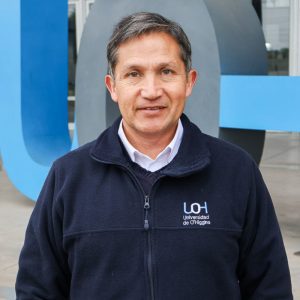
Dr. Rodrigo Contreras
Director del Instituto de Ciencias Agroalimentarias, Animales y Ambientales

Proyectos

  • Abril 2026 - Mayo 2029
AdjudicadoGobierno Regional - GORE

Fortaleciendo la protección del humedal Bucalemu: Transferencia de herramientas para la gestión, monitoreo y desarrollo sostenible

En el marco del diagnóstico territorial participativo realizado para el humedal Bucalemu, los beneficiarios identificaron necesidades prioritarias para mejorar la gestión integral del humedal, considerando su importancia como área protegida y las actividades antrópicas asociadas. Entre las propuestas más destacadas se encuentran: 1. Fortalecer la gobernanza local: Los actores locales señalaron la necesidad de establecer un plan de gestión municipal que permita una mejor coordinación entre las partes interesadas y que priorice acciones concretas para la conservación y uso sostenible del humedal. 2. Implementar programas educativos y de difusión: Se propuso incluir a la comunidad y a los colegios locales en actividades de educación ambiental, sensibilización sobre la importancia del humedal y difusión de buenas prácticas de manejo sostenible. 3. Capacitación en monitoreo ambiental: Los participantes destacaron la necesidad de contar con herramientas y conocimientos técnicos para monitorear y gestionar el humedal de manera autónoma y sostenible. 4. Zonificación y regulación de actividades: Identificaron la importancia de delimitar áreas para uso turístico, conservación estricta y actividades productivas de bajo impacto, para minimizar los efectos de las actividades humanas sobre el ecosistema. La Universidad de O’Higgins se compromete a incorporar estas propuestas como ejes centrales en el proyecto, apoyando al municipio en el desarrollo de su plan de gestión mediante las siguientes acciones concretas: • Generar información científica confiable a través del Laboratorio de Ecosistemas de Humedales, la cual servirá como base técnica para el diagnóstico sectorial y la planificación. • Facilitar talleres participativos para definir los objetos de conservación y metas del plan, así como estrategias específicas para su implementación. • Transferir herramientas de monitoreo ambiental y capacitar a actores locales, asegurando que puedan realizar un seguimiento continuo de los indicadores del plan. • Diseñar materiales educativos y desarrollar campañas de difusión que fortalezcan la conexión entre la comunidad y el humedal. "Como resultado del proceso de diagnóstico territorial participativo, los beneficiarios identificaron diversas iniciativas clave para fortalecer la gestión del humedal Bucalemu y promover su desarrollo sostenible. Entre las propuestas más destacadas se incluyen: 1. Charlas informativas: Estas actividades sensibilizarán a la comunidad sobre la importancia del humedal, destacando su biodiversidad y los beneficios de su conservación. Las charlas incluirán información técnica y relevante para fomentar un manejo más sostenible del ecosistema. 2. Programas educativos con colegios locales: Se implementarán talleres prácticos y actividades educativas para involucrar a estudiantes en la conservación del humedal, inspirando un sentido de pertenencia y responsabilidad hacia el ecosistema. 3. Capacitaciones especializadas: Funcionarios municipales y algunos actores clases recibirán formación en gestión sostenible, incluyendo monitoreo ambiental y prácticas de bajo impacto, para fortalecer sus capacidades en el manejo del humedal. 4. Actividades de difusión y sensibilización: Campañas de comunicación y material informativo promoverán el turismo responsable y orientarán a los visitantes hacia prácticas respetuosas con el ecosistema. 5. Fortalecimiento de los pequeños productores locales: Se desarrollarán actividades específicas para capacitar a productores en prácticas sostenibles y promocionar sus productos como parte de una estrategia de turismo responsable, fortaleciendo su conexión con el humedal. El Laboratorio de Ecosistemas de Humedales de la Universidad de O’Higgins aportará información científica y herramientas técnicas esenciales para sustentar estas iniciativas, especialmente en lo relacionado con el diagnóstico del ecosistema, el diseño de protocolos de monitoreo y la generación de indicadores clave para evaluar el impacto de las acciones implementadas. De esta forma, la Universidad de O’Higgins se compromete a incorporar estas propuestas en la iniciativa, asegurando su implementación como parte de una estrategia integral de transferencia de conocimiento y gestión sostenible en colaboración con los actores locales y otras instituciones relevantes
Investigador/a Responsable
  • Abril 2026 - Marzo 2029
AdjudicadoAgencia Nacional de Investigación y Desarrollo - ANID

Avocado is a very nutritious and tasty fruit, characteristics that have caused a high global demand for this fruit. Increasing evidence of health benefits of the avocado is both driving increased consumption and stimulating research. The results of this study are expected not only to provide more foundation into the agronomic, biochemical and molecular aspects associated to waterlogging of ‘Hass’ avocados grafted on different rootstocks but also provide potential biomarkers and genes involved in stress tolerance and select the best suited rootstocks for the current and the upcoming extreme climate change events, which may help to implement new Hass avocado production protocols that will reduce this predicted climate change problem in practice.
Co-Investigador/a
  • Abril 2026 - Marzo 2029
AdjudicadoAgencia Nacional de Investigación y Desarrollo - ANID

Effects of increased waterlogging under climate change on avocados (Persea americana Mill cv. Hass) grafted to several rootstocks

Avocado is a very nutritious and tasty fruit, characteristics that have caused a high global demand for this fruit. Increasing evidence of health benefits of the avocado is both driving increased consumption and stimulating research. Over the next few decades, a number of climate-related factors are expected to undergo significant change, leading to increases in CO2 and, depending on the region, temperature, humidity, salinity, flooding, and drought. Chile is expected to experience more frequent and severe flooding in the future due to climate change and sea level rise. By 2050, flooding in Chile could increase by an order of magnitude compared to the previous decade, while by the end of the century, Chile could experience more than 100 days of flooding each year. The frequency and severity of flooding will increase as sea levels rise. Under such predicted conditions, avocado orchards will suffer significant harm from waterlogging, which significantly will affect the growth, physiological performance and a general avocado production. The majority of avocado orchards are currently vulnerable to sporadic waterlogging as a result of climate change, either because of poor soil qualities or occasionally rising water tables. Waterlogging detrimentally affects avocado orchards at various levels. Reduced root and shoot growth due to soil oxygen depletion (plant-soil system), decreased transpiration rate, changes in the soil's oxidation-reduction status, decreased redox potential and ultimately decreased avocado production are the main effects of waterlogging on avocado. Climate change is increasing the frequency and severity of extreme weather events with flooding being the largest concern for Chile. Investigating how climate change factors combine with waterlogging stress, novel genes, and signaling components can provide useful insights into plant responses to waterlogging stress and future agricultural difficulties The species and occasionally the cultivar determine how long a plant may survive in a waterlogged condition. The rootstock (clonal or seedling rootstocks) used in the orchard may have an impact on the sensitivity to waterlogging. In this Project, it was hypothesized that: (1) Hass avocado grafted to different rootstocks (clonal or from seedling) may have a differential performance under waterlogging conditions and that the tolerance is driven by rootstock cultivar, stress severity, balance of oxidative stress and defense system at morpho-physiological, biochemical and molecular level and (2): Clonal o seedling rootstock influence Hass avocado responses to waterlogging by affecting root microbial community, carbon, nitrogen cycling and reduced soil components. Thus, the main objective of this proposal is to evaluate the effects of waterlogging on grafted Hass avocado to 04 different rootstocks (Dusa, Duke 7, Mexicola and Zutano) mainly used in the Central and South-Central region of Chile. A systematic fingerprinting analysis will be used in this project by integrating different tools for deep analysis (Chemo-Metabolomics, transcriptomics and metagenomics) and for monitoring changes in morpho-physiological and gas-exchange parameters, changes in plant-soil system by evaluating the composition and function of microbial communities within the pot soil in each treatment, the antioxidant defense system and reactive oxygen species, for better understanding the regulatory mechanisms of tolerance to waterlogging, identification of the potential genes regulating tolerance to waterlogging in Hass avocado and finally the selection of the rootstock with better agronomic performance. Four (4) different rootstocks will be used in this research (two hybrids from Mexican and Guatemalan races - Zutano and Dusa, two Mexican races - Mexicola and Duke 7) which will be grafted with the scion material collected from Hass avocado cultivar. Mexicola and Zutano Will be propagated by seeds; Duke 7 clonally propagated and clonal Dusa plantlets acquired in the national plant propagation nurseries due to protection of intellectual property. One year grafted Hass avocado on different rootstocks will be subjected to a waterlogging greenhouse experiment by submerging them in a plastic water tank with water level 5 cm above the soil Surface (140% field capacity) for 3, 6, 9, and 15 days against the control treatment (no waterlogging stress). Morphological, physio-biochemical and gas-exchange parameters, soil nutrient dinamics, function and composition of microbial community within the pot soil and sampling for transcriptomic analysis will then be performed. The results of this study are expected not only to provide more foundation into the agronomic, biochemical and molecular aspects associated to waterlogging of ‘Hass’ avocados grafted on different rootstocks but also provide potential biomarkers and genes involved in stress tolerance and select the best suited rootstocks for the current and the upcoming extreme climate change events, which may help to implement new Hass avocado production protocols that will reduce this predicted climate change problem in practice. This project will generate scientific and academic publications, extension and training of young researchers and will strengthen the network with national and international key partners. The findings will be also valuable for agronomists, plant physiologists, microbiologists and plant breeders to develop new avocado production protocols useful for waterlogging conditions that are predicted in Chile.
Investigador/a Responsable
  • Abril 2026 - Marzo 2029
AdjudicadoAgencia Nacional de Investigación y Desarrollo - ANID

Avocado is a very nutritious and tasty fruit, characteristics that have caused a high global demand for this fruit. Increasing evidence of health benefits of the avocado is both driving increased consumption and stimulating research. The results of this study are expected not only to provide more foundation into the agronomic, biochemical and molecular aspects associated to waterlogging of ‘Hass’ avocados grafted on different rootstocks but also provide potential biomarkers and genes involved in stress tolerance and select the best suited rootstocks for the current and the upcoming extreme climate change events, which may help to implement new Hass avocado production protocols that will reduce this predicted climate change problem in practice.
Investigador/a Responsable

Publicaciones

  • REVISTA Acta Physiologiae Plantarum
  • 2026

Tomato phytochrome B1 modulates N, P, and K deficiency response by root-to-shoot communication


• Mariana Bomfim Soares • Renato De Mello Prado • Dilier Olivera Viciedo • Eduarda Gonçalves Reis • Livia Tálita da Silva Carvalho

http://dx.doi.org/10.1007/s11738-026-03893-x

  • REVISTA Frontiers in Plant Science
  • 2026

Editorial: Enhancing plant health through silicon supplementation under nutritional stress


• Kamilla Silva Oliveira • Dilier Olivera Viciedo • Renato De Mello Prado • Jonas Pereira de Souza Júnior

http://dx.doi.org/10.3389/fpls.2026.1834639

  • REVISTA Revista Brasileira de Ciências Agrárias
  • 2026

Evaluation of soil chemical attributes as indicators of quality in olive groves


• Yan Vidal de Figueiredo Gomes Diniz • Júlio Cesar Ribeiro • Dilier Olivera Viciedo • Otavio Augusto Queiroz dos Santos • Hugo de Souza Fagundes

http://dx.doi.org/10.5039/agraria.v21i2a4087

  • REVISTA AgriEngineering
  • 2026

Spray Application Rates, Adjuvants, and Boron Behavior in Soybean: Insights from Physiological Responses and Remote Sensing in Cerrado


• Fábio Henrique Rojo Baio • Cid Naudi Silva Campos • Larissa Pereira Ribeiro Teodoro • Job Teixeira de Oliveira • Simone Pereira da Silva Baio

http://dx.doi.org/10.3390/agriengineering8050183

  • REVISTA Agronomy
  • 2026

Effect of Biochar as an Additive in Co-Composting: Impacts on Physicochemical Properties, Enzyme Activity, and Substrate Quality


• Gonzalo Carreño • Ricardo Adolfo Marambio Vergara • Uri Israel Aceituno Valenzuela • Humberto Nicolás Aponte Díaz • Marcela Calabi Floody

http://dx.doi.org/10.3390/agronomy16131268

  • REVISTA Acta Horticulturae
  • 2026

Effect of different auxin materials on growth and maturity of ‘French’ plum (P. domestica L.)


• Karen Fernanda Mesa Juliani • Catalina Javiera Pinto Palacios

http://dx.doi.org/10.17660/ActaHortic.2026.1450.6

Contacto

Instituto de Ciencias Agroalimentarias, Animales y Ambientales