Instituto de Ciencias de la Salud

La misión principal del Instituto de Ciencias de la Salud de la Universidad de O’Higgins es realizar investigación que busque dar respuestas a las necesidades de salud de la Región y del país, que se caracterice por ser pertinente y útil, de tipo multidisciplinario y vinculado a redes de colaboración internacional. Este conocimiento pondrá la creación e innovación al servicio de las personas y del desarrollo regional, con proyección nacional e internacional.

El Instituto de Ciencias de la Salud también contribuirá a la formación de profesionales de la salud con gran compromiso social, con sólidas bases científicas y un fuerte sentido público.


Equipo Administrativo

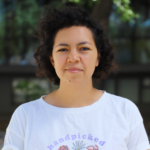
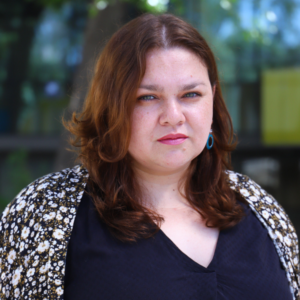
Daniela ReyesCoordinadora ejecutiva
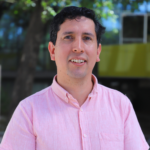
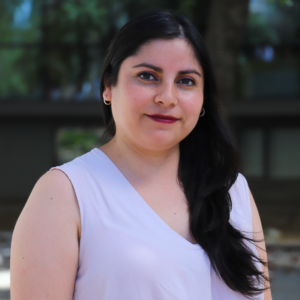
Camila LlancafilAsistente de Gestión
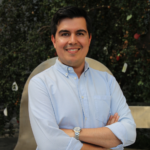
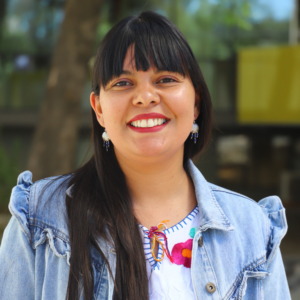
Eduardo MattusAsistente de investigación - Salud Pública
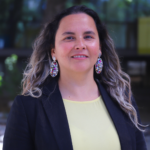
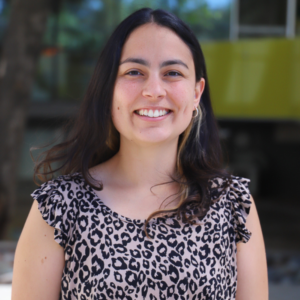
Valentina SepúlvedaAsistente de investigación - Ciencias Básicas
Paz Escalona BahamondeAsistente de investigación - Ciencias Aplicadas
Diana PonceEncargada de Laboratorio
Constanza VergaraVeterinaria

Proyectos

  • PNTE2607
  • Agosto 2026 - Julio 2027
  • Marzo 2026 - Noviembre 2026
En EjecuciónUniversidad de O'Higgins

Proyecto de Innovación para el Manejo de Huertos Productivos Agroecológicos

El proyecto busca implementar un plan de innovación social y técnica que permita rehabilitar los suelos y fortalecer la autogestión de los pequeños agricultores agroecológicos en la comuna de Marchigüe.
Responsable Alterno
  • NCS2025_37
  • Enero 2026 - Diciembre 2028
AdjudicadoAgencia Nacional de Investigación y Desarrollo - ANID

Nucleo Milenio Discapacidad y Ciudadania

DISCA (Discapacidad y Ciudadanía) es un núcleo que desde 2022 está dedicado al estudio inter y transdisciplinario de los procesos y mecanismos a través de los cuales las personas con discapacidad (PcD) se transforman en ciudadanas. Su objetivo general es examinar críticamente cómo las PcD construyen y negocian su ciudadanía en los ámbitos de: L1. la participación política, L2. el acceso a la justicia y L3. el acceso a la salud mental. Cada uno de estos ámbitos será una línea de trabajo de DISCA en los tres años del proyecto. Una cuarta línea se centrará en el uso de metodologías inclusivas y participativas en investigación en discapacidad. Nuestro enfoque se basa en dos pilares. Primero, la ciudadanía como forma de integración social mediante la igual consideración de todos. Consideramos aspectos institucionales (derechos civiles, políticos y sociales) y relacionales (demandas de reconocimiento). Segundo, el modelo social de la discapacidad, que busca superar el enfoque biomédico y entiende la discapacidad como resultado de la interacción entre condiciones de salud o déficits individuales y barreras sociales que impiden la plena participación de las PcD. El modelo social no es la mirada predominante. Siguen vigentes visiones asistencialistas que restringen la inclusión y el ejercicio de la ciudadanía de las PcD. Es urgente que la academia cree sinergias, tanto con organizaciones de PcD como con las instituciones del Estado, para examinar las barreras que afectan a las PcD y las vías para su superación. La escasez de investigación en discapacidad en Chile, y la necesidad de incorporar a PcD en la generación de conocimiento, hace nuestro proyecto muy relevante. La incorporación de PcD en el mundo académico a través de DISCA es una valiosa oportunidad para realizar cambios que preparen el camino para una mayor participación de otras PcD. Esperamos que sus resultados generen políticas inclusivas y participativas en discapacidad. DISCA está dirigido por una PcD, cuenta con un consejo de Expertos por Experiencia (con 7 PcD) y observa los principios de la investigación inclusiva y participativa. Sus investigadores principales, pioneros en la investigación en discapacidad en Chile, utilizan metodologías mixtas, cuantitativas y cualitativas, integrando conocimientos de sociología, derecho, salud, economía, sociología y psicología en conjunto con el campo transdisciplinario de los estudios de la discapacidad. Los logros a corto plazo se dirigen a: i) producir investigación inter y transdisciplinaria en discapacidad, ii) consolidar redes de colaboración con otros centros de investigación en el mundo, iii) formar capital humano en varios niveles, incluyendo PcD en todo el quehacer de DISCA y iv) informar la política pública. La meta a mediano plazo es consolidar a DISCA como el primer centro de excelencia en investigación en discapacidad de Latinoamérica, contribuyendo al fortalecimiento de los estudios de la discapacidad en el mundo.
Investigador/a Responsable
  • CIN250054
  • Enero 2026 - Enero 2031
AdjudicadoAgencia Nacional de Investigación y Desarrollo - ANID
Co-Investigador/a
  • CIN250054
  • Diciembre 2025
AdjudicadoAgencia Nacional de Investigación y Desarrollo - ANID

Centro de Investigación y Acción en Determinación Social y Salud Mental (Centro CIADES)

Mental health conditions and inequities in Chile have risen significantly over recent decades, fueled by factors such as social exclusion, precarious employment, and environmental challenges. In line with recent national legislation and policy reforms, including the recently proposed Mental Health Law (2024,) there is growing recognition that these issues require not only expanded clinical services but also a deeper focus on the socio-structural determinants of mental health (Breilh, 2023; Lund et al., 2018). The Centro de Investigación y Acción en Determinación Social y Salud Mental (Center for Research and Action in Social Determination and Mental Health) or CIADES responds to this urgency by adopting a Latin American–rooted Social Determination of Health (SDnH) framework, thereby situating mental health vulnerabilities and risks within broader historical, economic, and political contexts. CIADES will work in close collaboration with the Ministry of Social Development and Family (MIDESO) and the Ministry of Health (MINSAL), to generate robust evidence and policy guidance to address the social factors that affect and produce mental health problems beyond the individual. This collaboration ensures that the Center’s research advances academic knowledge and informs public-sector strategies and interventions. In doing so, CIADES seeks to address crucial social factors, including growing economic inequalities, stigma, and social disintegration, which have direct implications for mental well-being across the lifespan. Methodologically, CIADES employs a three-by-three matrix that interlinks three social determinants— Social Exclusion and Discrimination, Environmental Factors, and Employment—with three priority populations: migrants, older adults, and people with SMI (SMI). This matrix underpins interdisciplinary research lines, integrating quantitative (e.g., epidemiological surveys, geospatial risk mapping), qualitative (e.g., multimodal and sensory ethnography, focus groups), and participatory methods. AI-driven analyses, such as natural language processing for tracking stigma on social media, and economic evaluations that assess intervention feasibility also feature prominently within the Center’s approach. The significance of this research lies in its focus on macro-structural drivers—housing insecurity, workplace discrimination, socio-environmental conflicts—and how they contribute to mental health inequities. By examining these intersecting challenges, CIADES will move beyond an exclusively clinical perspective to propose and evaluate, in close collaboration with MIDESO and MINSAL, evidence-based strategies that can be implemented at multiple levels: local (community-based initiatives), regional (intersectoral policies), and national (legislative reforms). This holistic orientation positions CIADES as a transformative force in Chile’s public policy on mental health. Once established, the Center expects to identify and integrate other social determinants and priority groups. The Center’s work will be guided by four Specific Objectives. First, Generate Evidence for Strategic Interventions and Policy Reforms involves collaborating with MIDESO and MINSAL to systematically examine socio-structural determinants—such as discrimination, environmental stressors, and employment vulnerabilities—and generate robust evidence to inform and guide future interventions and policy actions. Second, Methodological Development uses participatory and mixed-methods approaches, emphasizing community involvement and local knowledge. Third, Capacity Building trains emerging researchers, policymakers, and practitioners to apply the SDnH framework. Finally, Knowledge Dissemination and Policy Advocacy entails translating findings into policy briefs, stakeholder workshops, and legislative recommendations that foreground structural change and equitable access to the exercise of rights, and to policies, programs and services. CIADES benefits from a multidisciplinary team involving principal and associate investigators with extensive track records in mental health, social sciences, environmental studies, and policy work. Their collective experience includes leading large-scale epidemiological surveys, designing culturally relevant interventions, and influencing legislative reforms. This breadth enables the Center to integrate cutting-edge methods—such as AI-driven stigma detection and geospatial modeling—within a robust theoretical framework. By drawing on a wide range of expertise, CIADES is uniquely positioned to undertake a comprehensive agenda that links empirical research to transformative actions in policy and practice. CIADES anticipates having a significant impact at the national level by influencing discussions on the design, implementation, and evaluation of policies related to labor laws, anti-discrimination statutes, community-oriented service models, environmental regulations, urban transformations, and other public policies with an impact on mental health. In the short term, the center aims to increase recognition of the structural factors that affect the mental health of different populations, factors that are often overlooked or ignored due to the current emphasis on individual-focused approaches. Collaborating with communities, CIADES will co-design initiatives and pilot projects that serve as scalable case studies. These efforts will lead to the production of policy briefs and guidelines, offering new frameworks to understand mental health challenges and proposing context-sensitive interventions. Over the medium to long term, CIADES aims to enhance intersectoral collaboration to drive structural-level interventions able to reduce mental health disparities— positioning Chile as a regional leader in addressing mental health through a justice-based perspective. The Center places a strong emphasis on capacity building and human capital formation as integral components of its mission. Students from undergraduate to postgraduate levels will benefit from interdisciplinary training in mental health, social epidemiology, qualitative methods, participatory methods and inclusive research, and implementation and dissemination science. This approach aims to nurture a new generation of scholars, practitioners, and other stakeholders equipped with the skills and knowledge necessary to advance the SDnH perspective. Furthermore, partnerships with leading international institutions, such as King’s College London and Columbia University, will facilitate knowledge exchange, foster global networks, and enhance CIADES’ reach and credibility on an international scale. Through proactive dissemination, outreach, and knowledge transfer, CIADES will engage with both public and private sectors to drive actionable change. Dissemination channels include academic publications, open-access materials, community forums, policy dialogues, and strategic communication through social media to ensure broader public penetration of the center's work. Regarding academic publications, CIADES is committed to publishing in high-impact international journals while also recognizing the strategic importance of positioning itself within Latin American and national contexts by contributing to academic journals in Spanish. Open-access materials will include the development of conceptual, methodological, and practical tools and guides, which will be freely available for public use. Community forums will serve both to share research findings and to identify emerging issues among the general population, while policy dialogues will aim to directly support and influence decision-making processes at the policy level based on the center’s research findings and experiences.
Co-Investigador/a
  • Noviembre 2025 - Diciembre 2028
AdjudicadoAgencia Nacional de Investigación y Desarrollo - ANID

Núcleo Milenio Discapacidad y Ciudadanía (DISCA 2026-2028)

El proyecto aborda la discapacidad no como un problema médico o individual, sino como un fenómeno social y de derechos humanos. Su enfoque se centra en cómo las instituciones y la sociedad chilena facilitan o restringen la autonomía y la participación de este colectivo.Para lograrlo, el núcleo estructura su trabajo en cuatro líneas de investigación interconectadas: 1)Participación política y social: Estudia cómo las personas con discapacidad ejercen sus derechos ciudadanos, el voto, y su representación en espacios de toma de decisiones. 2) Acceso a la justicia: Analiza los obstáculos legales y procedimentales que enfrentan al momento de acudir al sistema judicial, buscando promover reformas y ajustes razonables. 3)Acceso a la salud y salud mental: Examina las brechas de atención, el respeto a la autonomía en las decisiones de salud y el impacto del entorno en el bienestar psicológico. 4) Metodologías inclusivas y co-creación: Es el pilar transversal del proyecto. Asegura que la investigación no se haga sobre las personas con discapacidad, sino con ellas, incorporándolas como coinvestigadoras en los procesos científicos.El objetivo general de DISCA es analizar las condiciones, barreras y facilitadores que influyen en el ejercicio de la ciudadanía y los derechos de las personas con discapacidad en Chile, aportando evidencia científica y metodologías inclusivas que impacten directamente en el diseño de políticas públicas y en el debate social.
Co-Investigador/a

Publicaciones

  • REVISTA BMC Geriatrics
  • 2026

Randomized, double-blind, placebo-controlled trial of fecal microbiota transplantation from young physically active donors to promote resilient aging: clinical trial protocol (ARMOR study)


• Camila Astudillo-Guerrero • Angel Garrido • Dominique Masferrer • Carlos Andrés Sepúlveda Guzmán • Loreto Olavarría

http://dx.doi.org/10.1186/s12877-025-06920-7

  • REVISTA Scientific Reports
  • 2026

FKBP51 disrupts the insulin signaling pathway and impairs mitochondrial bioenergetics in HepG2 cells


• Camila Donoso-Barraza • Melissa Díaz-Roblero • Carlos Andrés Sepúlveda Guzmán • Anais Villegas-Bravo • Sandra A. Soto-Alarcón

http://dx.doi.org/10.1038/s41598-026-40414-9

  • REVISTA Scientific Reports
  • 2026

Protein yogurt and whey protein produce comparable muscle gains, but divergent microbiome shifts during strength training in older adults


• Matías Monsalves-Álvarez • Paulina Calderón-Romero • Thomas Hayes-Ortiz • Sofía Ignacia Bobadilla Julio • Francisco Sánchez

http://dx.doi.org/10.1038/s41598-026-51209-3

  • REVISTA Sports
  • 2026

Weekend Cyclists vs. Regular Cyclists: Association of Physical Training Distribution on Performance, Cardiometabolic Parameters and Muscle Oxygen Saturation


• Jose Gonzalez • Daniela Campos • Rafael Gutierrez • Gerardo Weisstaub • Carlos Andrés Sepúlveda Guzmán

http://dx.doi.org/10.3390/sports14070281

  • REVISTA Revista Iberoamericana de Ciencias de la Actividad Física y el Deporte
  • 2026

The physiological profile of elite trail runners under sport-specific uphill protocol


• Guillermo Cortés-Roco • Tomas Rivera-Kofle • Carlos Andrés Sepúlveda Guzmán • Claudio Nieto-Jiménez • Rodrigo Yáñez-Sepúlveda

http://dx.doi.org/10.24310/riccafd.15.2.2026.23368

  • REVISTA Scientific Reports
  • 2026

Regional tissue oxygenation during high-intensity exercise following voluntary isocapnic hyperpnea versus inspiratory threshold loading in endurance-trained individuals: a randomized controlled trial


• Felipe Andrés Contreras Briceño

http://dx.doi.org/10.1038/s41598-026-46153-1

Recursos

Descarga Documentos, Videos y Material disponible del instituto para uso público

Contacto

Instituto de Ciencias de la Salud