Ésta busca promover actividades de investigación y desarrollo al más alto nivel, a cargo de sus académico/as e investigadores/as en el marco de proyectos científicos y tecnológicos de alcance regional, nacional e internacional, en concordancia con el Plan de Desarrollo Estratégico de la Universidad.
Institutos de Investigación


Convocatorias
Cifras

208
Proyectos de investigación como responsables o co-investigadoras/es entre 2017 y 2021 (66 Fondecyt)

311
Publicaciones científicas entre 2017 y 2021 (266 en Scopus)

6
Institutos de investigación interdisciplinaria en 2021

100%
De académicas/os con grado de Doctor en 2021
Proyectos
- Septiembre 2026
AdjudicadoMinisterio de Ciencia, Tecnología, Conocimiento e Innovación
Un análisis experimental del condicionamiento clásico con fármacos ansiolíticos como estímulos incondicionados (CONFARAN)
Este proyecto se centra en el análisis de los mecanismos de condicionamiento que se ponen en marcha cuando se administran de forma repetida fármacos en presencia de estímulos inicialmente neutros. La evidencia previa revela la formación de asociaciones pavlovianas que desencadenan una respuesta condicionada que puede ser similar u opuesta a la respuesta incondicionada que produce el fármaco (por ej., Eikelboom y Stewart, 1982). Presentamos el proyecto en la modalidad de investigación no orientada puesto que los resultados esperados supondrían un avance teórico en el conocimiento sobre la formación de asociaciones entre los estímulos ambientales y las consecuencias derivadas de la administración de fármacos/drogas, un terreno que plantea un número importante de interrogantes en la investigación contemporánea sobre el condicionamiento clásico (por ej., Schwarting et al., 2024). A pesar de que el objetivo fundamental es el avance en el conocimiento, algunos de los objetivos también se ajustan a la prioridad temática Salud, puesto que los mecanismos del condicionamiento clásico en los que participan fármacos son esenciales para explicar el efecto placebo (por ej., Bąbel, 2019; Schwarting et al., 2024). Además, la posibilidad de que el contexto actúe como un estímulo condicionado debido a su asociación previa con un fármaco abre una línea de investigación relevante que podría replantear la perspectiva tradicional del tratamiento exclusivamente farmacológico de algunos trastornos psicopatológicos.
Consideramos que nuestra propuesta presenta un elevado grado de innovación, puesto que plantea una serie de investigaciones con animales sobre un tema de interés teórico y potencialmente aplicado en el que se emplearán modelos bien establecidos en la literatura para evaluar la ansiedad en roedores y se usarán fármacos que no han sido analizados de forma sistemática en el ámbito del condicionamiento clásico. Además, presenta una orientación multidisciplinar, puesto que integra una perspectiva estrictamente psicológica, centrada en el análisis de las asociaciones que se establecen entre estímulos inicialmente neutros y los efectos de fármacos ansiolíticos, con una orientación psicofisiológica centrada en el análisis de los cambios en los niveles de ácido gamma-aminobutírico (en adelante, GABA) como consecuencia de las diferentes manipulaciones experimentales previstas.
Por último, teniendo en cuenta que en la literatura previa aparecen diferencias en función del sexo de los animales con los procedimientos que planteamos emplear para evaluar la ansiedad (por ej., Johnston y File, 1991), incluiremos en todos nuestros experimentos el sexo de los animales como una variable independiente, lo que nos permitirá no sólo evitar sesgos en los resultados, sino avanzar en una comprensión más adecuada de los conocimientos obtenidos. Además, la etapa del ciclo estral parece ser un determinante importante de la ansiedad en roedores, puesto que las hembras en fase de diestro muestran más ansiedad que los machos o que las hembras en las fases de estro, metaestro y proestro (por ej., De Donner y Lowry, 2013). Por lo tanto, se controlará la fase del ciclo estral en la que se encuentren las animales hembras para tenerla en cuenta en los análisis de datos correspondientes.
Se puede anticipar el impacto internacional del proyecto desde una perspectiva objetiva atendiendo a las colaboraciones con diferentes grupos extranjeros que mantienen los miembros del grupo de investigación y que han dado lugar en proyectos previamente financiados a numerosas colaboraciones y publicaciones conjuntas. De hecho, en este proyecto se incluyen en el equipo de trabajo tres investigadoras de dos universidades extranjeras -Universidad de OHiggins (Chile) y Universidad de Guadalajara (México)- que permitirán el establecimiento de nuevas colaboraciones internacionales, más allá de las que venimos manteniendo en los últimos años con otras instituciones con la Christian Texas University o el Brooklyn College, ambas en EE.UU. Además, el desarrollo del proyecto solicitado favorecería la participación de los investigadores adscritos al mismo en programas europeos del European Research Council que se sitúen en la frontera del conocimiento, así como en proyectos Erasmus+ KA2 y otras convocatorias europeas o internacionales para establecer redes científicas y académicas con otros grupos con los que mantenemos contactos frecuentes en el ámbito de la Psicología Comparada, la Psicología Experimental y la Neurociencia.
Co-Investigador/a

- ID26I10214
- Julio 2026 - Junio 2028
AdjudicadoAgencia Nacional de Investigación y Desarrollo - ANID
GenomIA: Reporte genómico asistido por IA para la población chilena
Gracias a los avances en secuenciación genética, hoy es posible obtener el genoma completo de una persona con mayor rapidez, accesibilidad y a menor costo que hace algunos años. Aprovechando este escenario GenomIA, busca crear reportes simples y comprensibles sobre temas como la ancestría, los rasgos heredados, la respuesta a los medicamentos y algunas variantes genéticas de interés.
La plataforma contará con un asistente de inteligencia artificial en español, diseñado para explicar los resultados con lenguaje sencillo y responder consultas de los usuarios. Además, usará información genética de personas chilenas, permitiendo que los reportes se adecuen a la realidad nacional, reduciendo la dependencia de bases de datos internacionales.
El proyecto contempla un doble objetivo: educativo y de investigación. Por una parte, busca proporcionar información genética clara, responsable y comprensible; y por otra, avanzar hacia aplicaciones con mayor utilidad clínica, siempre como una herramienta de apoyo que complemente y facilite la labor de los profesionales de la salud.
Con este proyecto, buscamos acercar la genómica a la ciudadanía y avanzar hacia una tecnología hecha en Chile, pensada para comprender mejor nuestra diversidad y abrir nuevas oportunidades para la ciencia y la salud del futuro señala el Dr. Di Genova
Co-Investigador/a

- ID26I10214
- Julio 2026 - Junio 2028
AdjudicadoAgencia Nacional de Investigación y Desarrollo - ANID
GenomIA: Reporte genómico asistido por IA para la población chilena
Gracias a los avances en secuenciación genética, hoy es posible obtener el genoma completo de una persona con mayor rapidez, accesibilidad y a menor costo que hace algunos años. Aprovechando este escenario GenomIA, busca crear reportes simples y comprensibles sobre temas como la ancestría, los rasgos heredados, la respuesta a los medicamentos y algunas variantes genéticas de interés.
La plataforma contará con un asistente de inteligencia artificial en español, diseñado para explicar los resultados con lenguaje sencillo y responder consultas de los usuarios. Además, usará información genética de personas chilenas, permitiendo que los reportes se adecuen a la realidad nacional, reduciendo la dependencia de bases de datos internacionales.
El proyecto contempla un doble objetivo: educativo y de investigación. Por una parte, busca proporcionar información genética clara, responsable y comprensible; y por otra, avanzar hacia aplicaciones con mayor utilidad clínica, siempre como una herramienta de apoyo que complemente y facilite la labor de los profesionales de la salud.
Con este proyecto, buscamos acercar la genómica a la ciudadanía y avanzar hacia una tecnología hecha en Chile, pensada para comprender mejor nuestra diversidad y abrir nuevas oportunidades para la ciencia y la salud del futuro señala el Dr. Di Genova
Investigador/a Responsable

- ID26I10214
- Julio 2026 - Junio 2028
AdjudicadoAgencia Nacional de Investigación y Desarrollo - ANID
GenomIA: Reporte genómico asistido por IA para la población chilena
Gracias a los avances en secuenciación genética, hoy es posible obtener el genoma completo de una persona con mayor rapidez, accesibilidad y a menor costo que hace algunos años. Aprovechando este escenario GenomIA, busca crear reportes simples y comprensibles sobre temas como la ancestría, los rasgos heredados, la respuesta a los medicamentos y algunas variantes genéticas de interés.
La plataforma contará con un asistente de inteligencia artificial en español, diseñado para explicar los resultados con lenguaje sencillo y responder consultas de los usuarios. Además, usará información genética de personas chilenas, permitiendo que los reportes se adecuen a la realidad nacional, reduciendo la dependencia de bases de datos internacionales.
El proyecto contempla un doble objetivo: educativo y de investigación. Por una parte, busca proporcionar información genética clara, responsable y comprensible; y por otra, avanzar hacia aplicaciones con mayor utilidad clínica, siempre como una herramienta de apoyo que complemente y facilite la labor de los profesionales de la salud.
Con este proyecto, buscamos acercar la genómica a la ciudadanía y avanzar hacia una tecnología hecha en Chile, pensada para comprender mejor nuestra diversidad y abrir nuevas oportunidades para la ciencia y la salud del futuro señala el Dr. Di Genova
Responsable Alterno

- Julio 2026 - Julio 2028
AdjudicadoAgencia Nacional de Investigación y Desarrollo - ANID
Latin American Antarctic Research Consortium on Antimicrobial Resistance and Emerging Contaminants (LARCARE)
Background: The Latin American Antarctic Research Consortium on Antimicrobial
Resistance and Emerging Contaminants (LARCARE) is a collaborative Chilean-Brazilian
effort focused on supporting and promoting scientific research in the Antarctic region,
involving various institutions (Universidad de Concepción, Universidad Católica de
Valparaíso, Universidad de la Frontera, Universidad Mayor, Universidad de OHiggins,
Universidade de São Paulo, Instituto de Pesca, Laboratório Nacional de Luz Síncrotron, e
Universidade Federal de São Paulo), and researchers dedicated to understanding the microbial
biodiversity, the bioprospection, identification of emerging contaminants (chemical and
microplastics), emerging pathogens, and the antimicrobial resistance status in the South
Atlantic Ocean and the Antarctic continent. Objectives: This proposal aims to: i) investigate
the presence, concentration, and ecotoxicological effects of plastic particleswith an
emphasis on nanoplasticsin filter-feeding organisms of Antarctic benthic fauna,
particularly bivalve mollusks, as sentinel indicators of contamination. Additionally,
comparative sampling will be conducted in tropical and subtropical coastal areas of Brazil
and Chile to establish latitudinal patterns of plastic pollution and its biological effects; ii) to
identify and characterize antibiotic-resistant bacteria present in Antarctic wildlife species,
focusing on seabirds, pinnipeds, and benthic invertebrates; iii) to map antimicrobial resistance
genes, with particular attention to those associated with mobile genetic elements (e.g.,
blacarbapenemases, blaESBL, mcr, vanA); iv) to assess the microbial diversity associated with
wildlife, correlating it with ecological and behavioural variables; v) identification and
characterization of biodiversity, bacteriophages, bacteriocins and probiotics with clinical
potential; vi) to model potential routes of introduction and dissemination of resistance genes
in the Antarctic environment, including connections to sub-Antarctic and continental regions
via migratory species; vii) to foster the development of integrated public policies based on
the One Health approach, incorporating wildlife into AMR surveillance and control
programs. Methodology: The project will employ integrated approaches combining classical
microbiology, molecular biology (qPCR, metagenomic sequencing), omics methods,
microbial ecology, and ecological modelling. Samples of tissues, feces, and secretions will
be collected from marine birds and mammals, along with sediment and water from sites with
high wildlife activity or human presence (e.g., research stations and landing zones). Analyses
will include both phenotypic and genotypic screening for resistance, plasmid characterization,
and phylogenetic comparisons using international reference databases. Collaboration with
Chilean institutions will provide logistical access to Antarctica and promote technicalscientific exchange focused on the use of advanced analytical tools, such as vibrational
microspectroscopy (micro-FTIR and micro-Raman), and the Sirius (a new Brazilian
synchrotron light source in the Laboratório Nacional de Luz Síncrotron), enabling precise
characterization of plastic and chemical contaminants. This project aligns with global efforts
to monitor emerging plastic pollutants, emergent and antimicrobial-resistant pathogens,
contributing unprecedented and relevant data on the extent and impacts of these pollutants
and microorganisms across different ecological zones in the Southern Hemisphere. Omics
methods will be conducted in the CEFAP facility (https://cefap.icb.usp.br/). All genomic data
will be publicly available on the OneBR platform (http://www.onehealthbr.com/), under the
description of Antartic Genomic Microbial Data LARCARE Genome. Expected Impact:
This project aims to address a critical gap in the global understanding of AMR and emerging
contaminants by integrating Antarctic wildlife and the environment into existing surveillance
frameworks, generating novel data on the presence and ecological roles of Antarctic
organisms as vectors of antimicrobial resistance. The findings will provide essential scientific
input for biosafety measures in polar environments, support evidence-based policy
development, and reinforce the implementation of the One Health approach at the
international level. Bioproducts could be investigated in depth in next collaborative projects,
to consolidate technological innovation products. Finally, postgraduate, undergraduate, PhD
researchers and senior researchers will be favoured with the exchange of knowledge and visits
and internships at the respective laboratories that make up the consortium.
Co-Investigador/a

- Abril 2026 - Enero 2027
En Ejecución
Implementación de la Estrategia de Cuidado Integral Centrado en la Persona (ECICEP) desde la perspectiva de usuarios y profesionales del CESFAM Los Castaños, comuna de La Florida, durante el año 2025 y 2026
El aumento sostenido de la cronicidad y la multimorbilidad constituye uno de los principales desafíos contemporáneos para los sistemas de salud, particularmente en el nivel de Atención Primaria de Salud (APS). La evidencia nacional e internacional ha mostrado que los modelos tradicionales de atención, organizados en torno a programas fragmentados y centrados en patologías específicas, presentan limitaciones estructurales para responder de manera adecuada a trayectorias de cuidado complejas, prolongadas y socialmente determinadas (Lesende, 2013; Ghiyasvandian et al., 2021). En respuesta a este escenario, el Ministerio de Salud de Chile impulsó la Estrategia de Cuidado Integral Centrado en la Persona (ECICEP), concebida como una expresión operativa del Modelo de Atención Integral de Salud Familiar y Comunitario (MAIS). ECICEP busca reorientar el modelo de atención hacia una lógica integral, continua y centrada en las personas, sus familias y comunidades, superando la fragmentación programática mediante el rediseño de procesos asistenciales y la estratificación de riesgo de la población usuaria (Ministerio de Salud de Chile [MINSAL], 2021, 2025). Por lo tanto, el objetivo del proyecto es Analizar la implementación de la Estrategia de Cuidado Integral Centrado en la Persona (ECICEP) en el CESFAM Los Castaños para determinar la relación entre los indicadores de cuidado de los usuarios (G2-G3) y las dinámicas tanto organizacionales como de los profesionales que subyacen a dichos resultados, durante el 2025 y 2026.
Investigador/a Responsable

Últimas Publicaciones
- REVISTA Mineralium Deposita
- 2026
Unravelling the petrogenetic link between carbonatites and high-grade Nb-rich phoscorites: insights from in-situ magnetite microanalysis at the Boa Vista deposit, Central Brazil
• Felipe Velásquez Ruiz • Martin Reich • Sam Broom-Fendley • Dongbo Tan • Santiago Tassara

- REVISTA Profesorado. Revista de curriculum y formación del profesorado
- 2026
CONOCIMIENTO DE PROFESORES DE EDUCACIÓN ESPECIAL PARA ENSEÑAR MATEMÁTICAS: PERSPECTIVAS DESDE LA CO-DOCENCIA
• Juan Luis Piñeiro Garrido • Eder Antonio Pinto Marín

- REVISTA Uno. Revista de didáctica de las matemáticas
- 2026
El desarrollo de la justificación al interactuar con el signo igual: Una aproximación al pensamiento algebraico en primaria
• Marianela Alejandra Coahila López • Eder Antonio Pinto Marín
- REVISTA Uno. Revista de didáctica de las matemáticas
- 2026
Uso y vinculación de representaciones en situaciones multiplicativas: El rol de las representaciones múltiples
• Eder Antonio Pinto Marín • Daniela Beatriz Vargas Rivera
- REVISTA Scientific Reports
- 2026
Effects of aged and pristine microplastics on physical, chemical, and biological soil properties
• Arlet Andrea Cortez Marambio • Yoelvis Noe Sulbaran Bracho • Brynelly Bastidas • Agustín Cristóbal Vidal Toledo • Juan Chirinos Colina

Novedades destacadas

Lunes 17, Agosto
Anillos de crecimiento para entender el futuro de los bosques de Chile central frente a la sequía
Con financiamiento de la Royal Society of Edinburgh, un proyecto entre la Universidad de O'Higgins y la Universidad de Stirling (Escocia) estudiará la respuesta de los árboles a las condiciones de sequía extrema de los años 2019 y 2021 para detectar señales tempranas de un posible "cambio de estado" hacia formaciones más arbustivas.
Saber más
Lunes 17, Agosto
UOH se adjudica proyecto del programa Explora de Agrosuper para optimizar el compostaje de residuos porcinos
La iniciativa liderada por el académico Jorge Medina fue una de las cuatro propuestas seleccionadas entre 130 postulaciones.
Saber más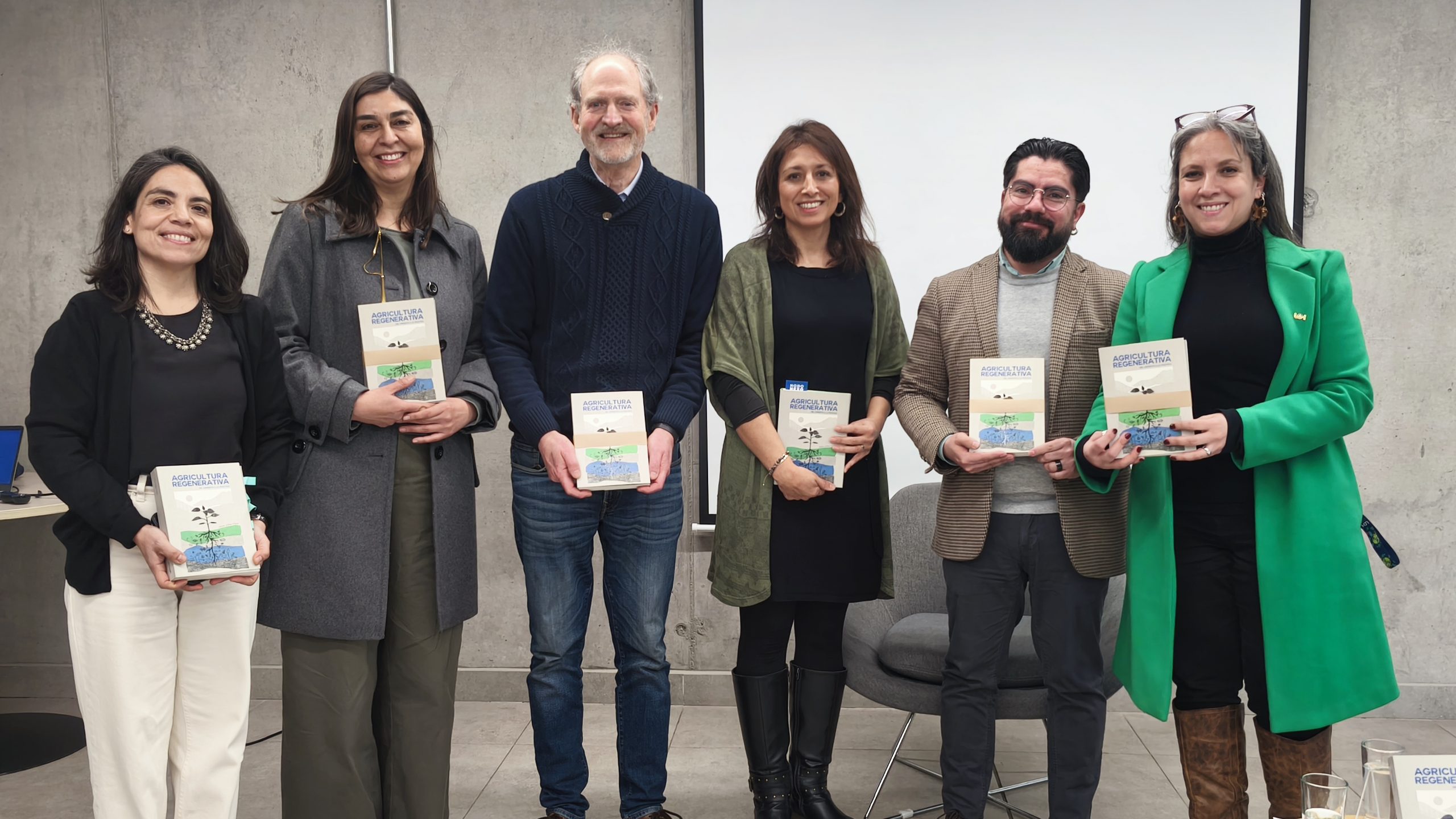
Miércoles 12, Agosto
Presentan el libro “Agricultura Regenerativa: Del concepto a la práctica” del agrónomo Jaime Jullian Pope en la UOH
El modelo de agricultura regenerativa busca revertir este deterioro para devolver al suelo su funcionalidad óptima, permitiendo sostener los niveles productivos a partir de los recursos naturales esenciales
Saber más