Ésta busca promover actividades de investigación y desarrollo al más alto nivel, a cargo de sus académico/as e investigadores/as en el marco de proyectos científicos y tecnológicos de alcance regional, nacional e internacional, en concordancia con el Plan de Desarrollo Estratégico de la Universidad.
Institutos de Investigación
Convocatorias
Cifras

208
Proyectos de investigación como responsables o co-investigadoras/es entre 2017 y 2021 (66 Fondecyt)

311
Publicaciones científicas entre 2017 y 2021 (266 en Scopus)

6
Institutos de investigación interdisciplinaria en 2021

100%
De académicas/os con grado de Doctor en 2021
Proyectos
- Abril 2026
AdjudicadoAgencia Nacional de Investigación y Desarrollo - ANID
Charting Colon Cancers Molecular Axes via an Integrated Multi-Omic Atlas and AI-Driven Histopathology
[vc_section el_class="container mx-auto align-items-center circle--pattern" css=".vc_custom_1648956589196{padding-top: 3rem !important;}"][vc_row el_class="pb-5"][vc_column][vc_wp_custommenu nav_menu="6"][uoh_breadcrumb_component automatic_breadcrumb="true"][uoh_title_component title_dropdown="big" title_decorator="true"]{{title}}[/uoh_title_component][vc_column_text css=""]Chile is facing one of the steepest increases in Colorectal cancer (CRC) incidence and mortality in the Southern Cone, with
the greatest surge occurring in adults ≤ 50 years. Incidence is lowest in the far north and increases toward the
south-central regions, mirroring a gradient in Aymara-Mapuche Native-American ancestry, an axis largely absent from the
European reference cohorts that guide modern precision oncology. To fill this gap, we propose a four-year project to create
the first Chile-specific, multi-omic and histopathological atlas of CRC and to explore ancestry-aware, AI-assisted
diagnostics.
Rationale and Hypothesis.
We hypothesise that Chilean CRC shows (i) unique, ancestry-driven molecular patterns that differ from European tumors;
(ii) AI models can detect these patterns directly on routine whole-slide images, and (iii) they shape distinct evolutionary
paths in early- versus late-onset disease.
Specific objectives.
Molecular landscape & heterogeneity: Produce single-gland long-read WGS, methylome, and transcriptome profiles for
100 tumors (30 early-onset, 70 late-onset; ≥30× coverage, ≥50 % purity).
Ancestry impact: Phase somatic alterations by local ancestry and contrast their frequencies with European CRC
genomes (TCGA, PCAWG).
AI-enhanced histopathology: Train and externally validate multi-instance-learning (MIL) models that predict microsatellite
instability, driver mutations, and whole-genome doubling from matched WSIs, targeting AUC ≥ 0.80 (pilot: AUC ≥ 0.85 for
whole-genome doubling on TCGA WSIs).
Evolutionary trajectories: Multi-region sequence early-onset and late-onset tumors, reconstruct their clonal phylogenies,
and contrast the resulting evolutionary patterns between the two age groups.
Team capacity & resources. Computational biologist Alex Di Genova (genomics & AI), pathologist Juan Carlos Araya
(digital pathology), and gastro-immunologist Tamara Pérez-Jeldres (clinical phenotyping) have prospective access to >220
new CRC resections and >1,800 registry entries each year. A biobank already houses 100 well-annotated tumour
specimens from hospitals in Santiago and the OHiggins Region, ready for immediate sequencing and imaging.
As a team we are delivering important results as (i) the generation of the first telomere-to-telomere Chilean genome,
establishing a population-specific reference; (ii) sequenced >270 high-coverage whole genomes of chileans individuals (70
healthy donors, 120 hereditary-breast-cancer cases, 80 primary gallbladder tumors); iii) built the first multi-omic atlas of
gallbladder cancer by integrating our data with Korean (n = 94) and Indian (n = 64) cohorts, uncovering a Chile-enriched
proliferative phenotype; and (iv) developed CRAB-MIL, a weakly supervised deep-learning framework that predicts
whole-genome doubling from routine H&E slides with an AUC > 0.85 and provides attention maps for interpretability. These
accomplishments demonstrate our ability to generate, integrate, and clinically interpret large-scale genomic and AI
datasetscapabilities directly transferable to Chilean CRC. International collaborators Anaïs Baudot (Marseille) and Luis
Zapata (Institute of Cancer Research, London) further contribute multi-omic network analysis and evolutionary-genomics
expertise, respectively.
Interdisciplinary workflow. Clinical phenotyping, computational histopathology, PromethION sequencing, and Nextflow
harmonisation feed ancestry-aware genomic analyses; attention-based models are fine-tuned on TCGA and Chilean WSIs;
computational, pathology, and gastroenterology teams jointly review outputs to prioritise clinically relevant signals. All
variant calls, methylomes, expression matrices, AI prediction, and metadata will be released through an open and intuitive
TumorMap portal.
Expected Outcomes and Impact.
The project will (i) reveal population-specific drivers and mutational processes, (ii) quantify the frequency of clinically
actionable biomarkers originally identified in Europeans, (iii) deliver image-based tools that offer low-cost, molecular
stratification and heterogeneity scoring, and (iv) provide a high-resolution evolutionary framework for EO versus LO CRC.
Collectively, these data will offer the first high-resolution portrait of the Chilean CRC and lay the groundwork for
ancestry-aware screening, diagnostic, and treatment strategies.[/vc_column_text][/vc_column][/vc_row][/vc_section][vc_section css=".vc_custom_1649209804184{background-color: #f6faff !important;}" el_class="p-md-0 pt-md-5"][vc_row el_class="container mx-auto align-items-center p-md-0 pt-5"][vc_column el_class="p-0"][/vc_column][/vc_row][/vc_section][vc_section css=".vc_custom_1649210787516{background-color: #f6faff !important;}" el_class="p-md-0 pt-md-5 pb-md-5"][vc_row el_class="container mx-auto align-items-center"][vc_column][/vc_column][/vc_row][/vc_section]
Investigador/a Responsable

- Abril 2026
AdjudicadoAgencia Nacional de Investigación y Desarrollo - ANID
Charting Colon Cancers Molecular Axes via an Integrated Multi-Omic Atlas and AI-Driven Histopathology
[vc_section el_class="container mx-auto align-items-center circle--pattern" css=".vc_custom_1648956589196{padding-top: 3rem !important;}"][vc_row el_class="pb-5"][vc_column][vc_wp_custommenu nav_menu="6"][uoh_breadcrumb_component automatic_breadcrumb="true"][uoh_title_component title_dropdown="big" title_decorator="true"]{{title}}[/uoh_title_component][vc_column_text css=""]Chile is facing one of the steepest increases in Colorectal cancer (CRC) incidence and mortality in the Southern Cone, with
the greatest surge occurring in adults ≤ 50 years. Incidence is lowest in the far north and increases toward the
south-central regions, mirroring a gradient in Aymara-Mapuche Native-American ancestry, an axis largely absent from the
European reference cohorts that guide modern precision oncology. To fill this gap, we propose a four-year project to create
the first Chile-specific, multi-omic and histopathological atlas of CRC and to explore ancestry-aware, AI-assisted
diagnostics.
Rationale and Hypothesis.
We hypothesise that Chilean CRC shows (i) unique, ancestry-driven molecular patterns that differ from European tumors;
(ii) AI models can detect these patterns directly on routine whole-slide images, and (iii) they shape distinct evolutionary
paths in early- versus late-onset disease.
Specific objectives.
Molecular landscape & heterogeneity: Produce single-gland long-read WGS, methylome, and transcriptome profiles for
100 tumors (30 early-onset, 70 late-onset; ≥30× coverage, ≥50 % purity).
Ancestry impact: Phase somatic alterations by local ancestry and contrast their frequencies with European CRC
genomes (TCGA, PCAWG).
AI-enhanced histopathology: Train and externally validate multi-instance-learning (MIL) models that predict microsatellite
instability, driver mutations, and whole-genome doubling from matched WSIs, targeting AUC ≥ 0.80 (pilot: AUC ≥ 0.85 for
whole-genome doubling on TCGA WSIs).
Evolutionary trajectories: Multi-region sequence early-onset and late-onset tumors, reconstruct their clonal phylogenies,
and contrast the resulting evolutionary patterns between the two age groups.
Team capacity & resources. Computational biologist Alex Di Genova (genomics & AI), pathologist Juan Carlos Araya
(digital pathology), and gastro-immunologist Tamara Pérez-Jeldres (clinical phenotyping) have prospective access to >220
new CRC resections and >1,800 registry entries each year. A biobank already houses 100 well-annotated tumour
specimens from hospitals in Santiago and the OHiggins Region, ready for immediate sequencing and imaging.
As a team we are delivering important results as (i) the generation of the first telomere-to-telomere Chilean genome,
establishing a population-specific reference; (ii) sequenced >270 high-coverage whole genomes of chileans individuals (70
healthy donors, 120 hereditary-breast-cancer cases, 80 primary gallbladder tumors); iii) built the first multi-omic atlas of
gallbladder cancer by integrating our data with Korean (n = 94) and Indian (n = 64) cohorts, uncovering a Chile-enriched
proliferative phenotype; and (iv) developed CRAB-MIL, a weakly supervised deep-learning framework that predicts
whole-genome doubling from routine H&E slides with an AUC > 0.85 and provides attention maps for interpretability. These
accomplishments demonstrate our ability to generate, integrate, and clinically interpret large-scale genomic and AI
datasetscapabilities directly transferable to Chilean CRC. International collaborators Anaïs Baudot (Marseille) and Luis
Zapata (Institute of Cancer Research, London) further contribute multi-omic network analysis and evolutionary-genomics
expertise, respectively.
Interdisciplinary workflow. Clinical phenotyping, computational histopathology, PromethION sequencing, and Nextflow
harmonisation feed ancestry-aware genomic analyses; attention-based models are fine-tuned on TCGA and Chilean WSIs;
computational, pathology, and gastroenterology teams jointly review outputs to prioritise clinically relevant signals. All
variant calls, methylomes, expression matrices, AI prediction, and metadata will be released through an open and intuitive
TumorMap portal.
Expected Outcomes and Impact.
The project will (i) reveal population-specific drivers and mutational processes, (ii) quantify the frequency of clinically
actionable biomarkers originally identified in Europeans, (iii) deliver image-based tools that offer low-cost, molecular
stratification and heterogeneity scoring, and (iv) provide a high-resolution evolutionary framework for EO versus LO CRC.
Collectively, these data will offer the first high-resolution portrait of the Chilean CRC and lay the groundwork for
ancestry-aware screening, diagnostic, and treatment strategies.[/vc_column_text][/vc_column][/vc_row][/vc_section][vc_section css=".vc_custom_1649209804184{background-color: #f6faff !important;}" el_class="p-md-0 pt-md-5"][vc_row el_class="container mx-auto align-items-center p-md-0 pt-5"][vc_column el_class="p-0"][/vc_column][/vc_row][/vc_section][vc_section css=".vc_custom_1649210787516{background-color: #f6faff !important;}" el_class="p-md-0 pt-md-5 pb-md-5"][vc_row el_class="container mx-auto align-items-center"][vc_column][/vc_column][/vc_row][/vc_section]
Investigador/a Responsable
- PYT-2026-186
- Abril 2026 - Marzo 2029
AdjudicadoFundación para la Innovación Agraria - FIA
Obtención de ingredientes funcionales desde pulpa de sandía residual post cosecha para su uso en la industria de alimentos funcionales y en la agricultura
[vc_section el_class="container mx-auto align-items-center circle--pattern" css=".vc_custom_1648956589196{padding-top: 3rem !important;}"][vc_row el_class="pb-5"][vc_column][vc_wp_custommenu nav_menu="6"][uoh_breadcrumb_component automatic_breadcrumb="true"][uoh_title_component title_dropdown="big" title_decorator="true"]{{title}}[/uoh_title_component][vc_column_text css=""]La producción de semillas de sandía en Chile es una de las que genera mayores volúmenes (12,5%) y mejores precios (26 MM U$FOB) de
exportación respecto del total de semillas exportadas. En los últimos 5 años su exportación ha aumentado considerablemente ocupando el
segundo lugar en este mercado. Derivado del procesamiento de los frutos se genera un alto porcentaje de pulpa y cáscara; residuos no
aprovechables como subproducto para otras industrias como cuarta gama y/o farmacéutica. El elevado contenido antioxidantes de la sandía
representa una oportunidad para su extracción y uso en otras industrias. La solución innovadora permitirá reutilizar grandes volúmenes de la
pulpa y cáscara, mitigando su disposición inadecuada y mejorando prácticas agrícolas y biotecnológicas. El objetivo de la propuesta es
desarrollar un paquete tecnológico consistente en tres aplicaciones que permiten valorizar los residuos de cáscara y pulpa de sandía para la
producción de nutracéuticos, bioenmienda de suelos provenientes de relaves mineros, y sustrato para el crecimiento de microorganismos. El
proyecto busca generar innovaciones que promuevan la transformación de los residuos agrícolas, proyectando así nuevos negocios para los
productores hortícolas en la industria de los alimentos dando valor agregado a los residuos derivados del procesamiento de semillas. Los
resultados esperados de esta iniciativa son: Portafolio de al menos 2 ingredientes funcionales (Licopeno y Citrulina) desarrollados y
caracterizados; validación técnica del ingrediente principal (Licopeno o citrulina) con actividad antioxidante; bioenmienda validada en un
entorno operacional (campo), alcanzando el nivel de madurez tecnológica TRL7; análisis de mercado robusto que incluye un plan de
escalamiento técnico de la bioenmienda; medio de cultivo validado en un entorno operacional (empresas), alcanzando el nivel de madurez
tecnológica TRL7; y análisis de mercado robusto que incluye un plan de escalamiento técnico.[/vc_column_text][/vc_column][/vc_row][/vc_section][vc_section css=".vc_custom_1649209804184{background-color: #f6faff !important;}" el_class="p-md-0 pt-md-5"][vc_row el_class="container mx-auto align-items-center p-md-0 pt-5"][vc_column el_class="p-0"][/vc_column][/vc_row][/vc_section][vc_section css=".vc_custom_1649210787516{background-color: #f6faff !important;}" el_class="p-md-0 pt-md-5 pb-md-5"][vc_row el_class="container mx-auto align-items-center"][vc_column][/vc_column][/vc_row][/vc_section]
Responsable Alterno

- PYT-2026-186
- Abril 2026 - Marzo 2029
AdjudicadoFundación para la Innovación Agraria - FIA
Obtención de ingredientes funcionales desde pulpa de sandía residual post cosecha para su uso en la industria de alimentos funcionales y en la agricultura
[vc_section el_class="container mx-auto align-items-center circle--pattern" css=".vc_custom_1648956589196{padding-top: 3rem !important;}"][vc_row el_class="pb-5"][vc_column][vc_wp_custommenu nav_menu="6"][uoh_breadcrumb_component automatic_breadcrumb="true"][uoh_title_component title_dropdown="big" title_decorator="true"]{{title}}[/uoh_title_component][vc_column_text css=""]La producción de semillas de sandía en Chile es una de las que genera mayores volúmenes (12,5%) y mejores precios (26 MM U$FOB) de
exportación respecto del total de semillas exportadas. En los últimos 5 años su exportación ha aumentado considerablemente ocupando el
segundo lugar en este mercado. Derivado del procesamiento de los frutos se genera un alto porcentaje de pulpa y cáscara; residuos no
aprovechables como subproducto para otras industrias como cuarta gama y/o farmacéutica. El elevado contenido antioxidantes de la sandía
representa una oportunidad para su extracción y uso en otras industrias. La solución innovadora permitirá reutilizar grandes volúmenes de la
pulpa y cáscara, mitigando su disposición inadecuada y mejorando prácticas agrícolas y biotecnológicas. El objetivo de la propuesta es
desarrollar un paquete tecnológico consistente en tres aplicaciones que permiten valorizar los residuos de cáscara y pulpa de sandía para la
producción de nutracéuticos, bioenmienda de suelos provenientes de relaves mineros, y sustrato para el crecimiento de microorganismos. El
proyecto busca generar innovaciones que promuevan la transformación de los residuos agrícolas, proyectando así nuevos negocios para los
productores hortícolas en la industria de los alimentos dando valor agregado a los residuos derivados del procesamiento de semillas. Los
resultados esperados de esta iniciativa son: Portafolio de al menos 2 ingredientes funcionales (Licopeno y Citrulina) desarrollados y
caracterizados; validación técnica del ingrediente principal (Licopeno o citrulina) con actividad antioxidante; bioenmienda validada en un
entorno operacional (campo), alcanzando el nivel de madurez tecnológica TRL7; análisis de mercado robusto que incluye un plan de
escalamiento técnico de la bioenmienda; medio de cultivo validado en un entorno operacional (empresas), alcanzando el nivel de madurez
tecnológica TRL7; y análisis de mercado robusto que incluye un plan de escalamiento técnico.[/vc_column_text][/vc_column][/vc_row][/vc_section][vc_section css=".vc_custom_1649209804184{background-color: #f6faff !important;}" el_class="p-md-0 pt-md-5"][vc_row el_class="container mx-auto align-items-center p-md-0 pt-5"][vc_column el_class="p-0"][/vc_column][/vc_row][/vc_section][vc_section css=".vc_custom_1649210787516{background-color: #f6faff !important;}" el_class="p-md-0 pt-md-5 pb-md-5"][vc_row el_class="container mx-auto align-items-center"][vc_column][/vc_column][/vc_row][/vc_section]
Investigador/a Responsable

- Abril 2026
AdjudicadoAgencia Nacional de Investigación y Desarrollo - ANID
Evaluation of microplastic pollution on soil microbiota, biogeochemistry, and crop health in agricultural systems
[vc_section el_class="container mx-auto align-items-center circle--pattern" css=".vc_custom_1648956589196{padding-top: 3rem !important;}"][vc_row el_class="pb-5"][vc_column][vc_wp_custommenu nav_menu="6"][uoh_breadcrumb_component automatic_breadcrumb="true"][uoh_title_component title_dropdown="big" title_decorator="true"]{{title}}[/uoh_title_component][vc_column_text css=""]o assess microplastic pollution in agricultural soils in the O'Higgins Region and its impact on biogeochemical cycles, soil microbiota, and the eco-physiological and agronomic response of agricultural plants.[/vc_column_text][/vc_column][/vc_row][/vc_section][vc_section css=".vc_custom_1649209804184{background-color: #f6faff !important;}" el_class="p-md-0 pt-md-5"][vc_row el_class="container mx-auto align-items-center p-md-0 pt-5"][vc_column el_class="p-0"][/vc_column][/vc_row][/vc_section][vc_section css=".vc_custom_1649210787516{background-color: #f6faff !important;}" el_class="p-md-0 pt-md-5 pb-md-5"][vc_row el_class="container mx-auto align-items-center"][vc_column][/vc_column][/vc_row][/vc_section]
Patrocinante

- Abril 2026
AdjudicadoAgencia Nacional de Investigación y Desarrollo - ANID
Evaluation of microplastic pollution on soil microbiota, biogeochemistry, and crop health in agricultural systems
[vc_section el_class="container mx-auto align-items-center circle--pattern" css=".vc_custom_1648956589196{padding-top: 3rem !important;}"][vc_row el_class="pb-5"][vc_column][vc_wp_custommenu nav_menu="6"][uoh_breadcrumb_component automatic_breadcrumb="true"][uoh_title_component title_dropdown="big" title_decorator="true"]{{title}}[/uoh_title_component][vc_column_text css=""]o assess microplastic pollution in agricultural soils in the O'Higgins Region and its impact on biogeochemical cycles, soil microbiota, and the eco-physiological and agronomic response of agricultural plants.[/vc_column_text][/vc_column][/vc_row][/vc_section][vc_section css=".vc_custom_1649209804184{background-color: #f6faff !important;}" el_class="p-md-0 pt-md-5"][vc_row el_class="container mx-auto align-items-center p-md-0 pt-5"][vc_column el_class="p-0"][/vc_column][/vc_row][/vc_section][vc_section css=".vc_custom_1649210787516{background-color: #f6faff !important;}" el_class="p-md-0 pt-md-5 pb-md-5"][vc_row el_class="container mx-auto align-items-center"][vc_column][/vc_column][/vc_row][/vc_section]
Patrocinante
Últimas Publicaciones
- REVISTA Front. Chem. Biol
- 1970
A Mini Review of mycotoxin’s occurrence in food in South America in the last five years: research gaps and challenges in a climate change era

- REVISTA Journal of Logical and Algebraic Methods in Programming
- 2026
Nominal Anti-Unification Modulo Equational Theories
• Alexander Baumgartner • Daniele Nantes-Sobrinho
- REVISTA Spectrochimica Acta Part A: Molecular and Biomolecular Spectroscopy
- 2026
Quality control of entomopathogenic nematodes through infrared spectroscopy (FTIR-ATR, 2D-COS): Tracing, modelling and prediction
• Ernesto San Blas • Gabriel Paba • Edgar Portillo • Mayamarú Guerra • Patricia Morales Montero
- REVISTA Plant Disease
- 2026
First Report of Fusarium clavum Causing Fusarium Wilt Disease on Watermelon in Chile
• Set Madian Pérez Fuentealba • Nicole Cortez Jorquera • Jenny Laura Soto Basaez • Rodrigo Iván Contreras Soto
- REVISTA Plant Disease
- 2026
First Report of Fusarium clavum Causing Fusarium Wilt Disease on Watermelon in Chile
• Set Madian Pérez Fuentealba • Nicole Cortez Jorquera • Jenny Laura Soto Basaez • Rodrigo Iván Contreras Soto
Novedades destacadas
Lunes 16, Febrero
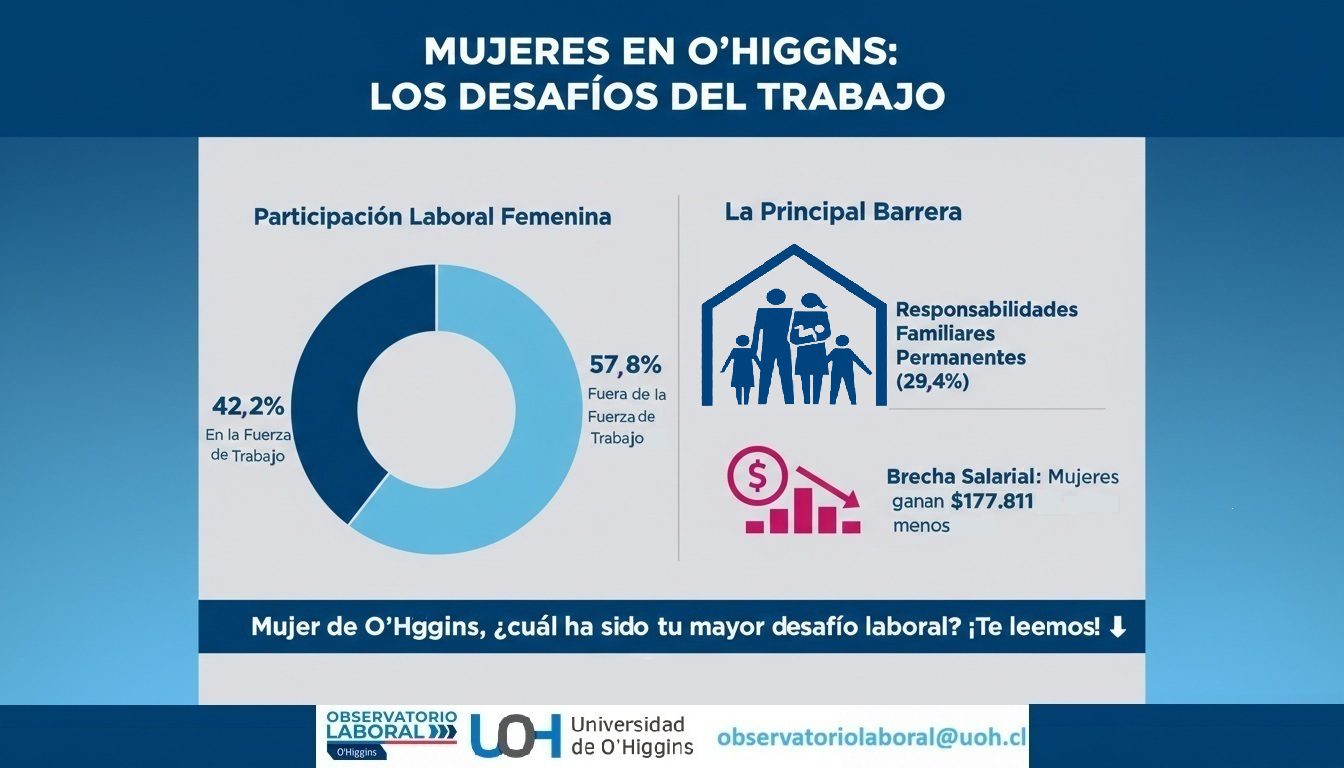
Mujer y mercado laboral en O’Higgins: carencias e ingresos bajo la lupa
Con un 60% de participación femenina fuera del empleo formal, el debate se centra en eliminar desigualdades salariales y fortalecer políticas de cuidado que impulsen la autonomía económica.
Saber más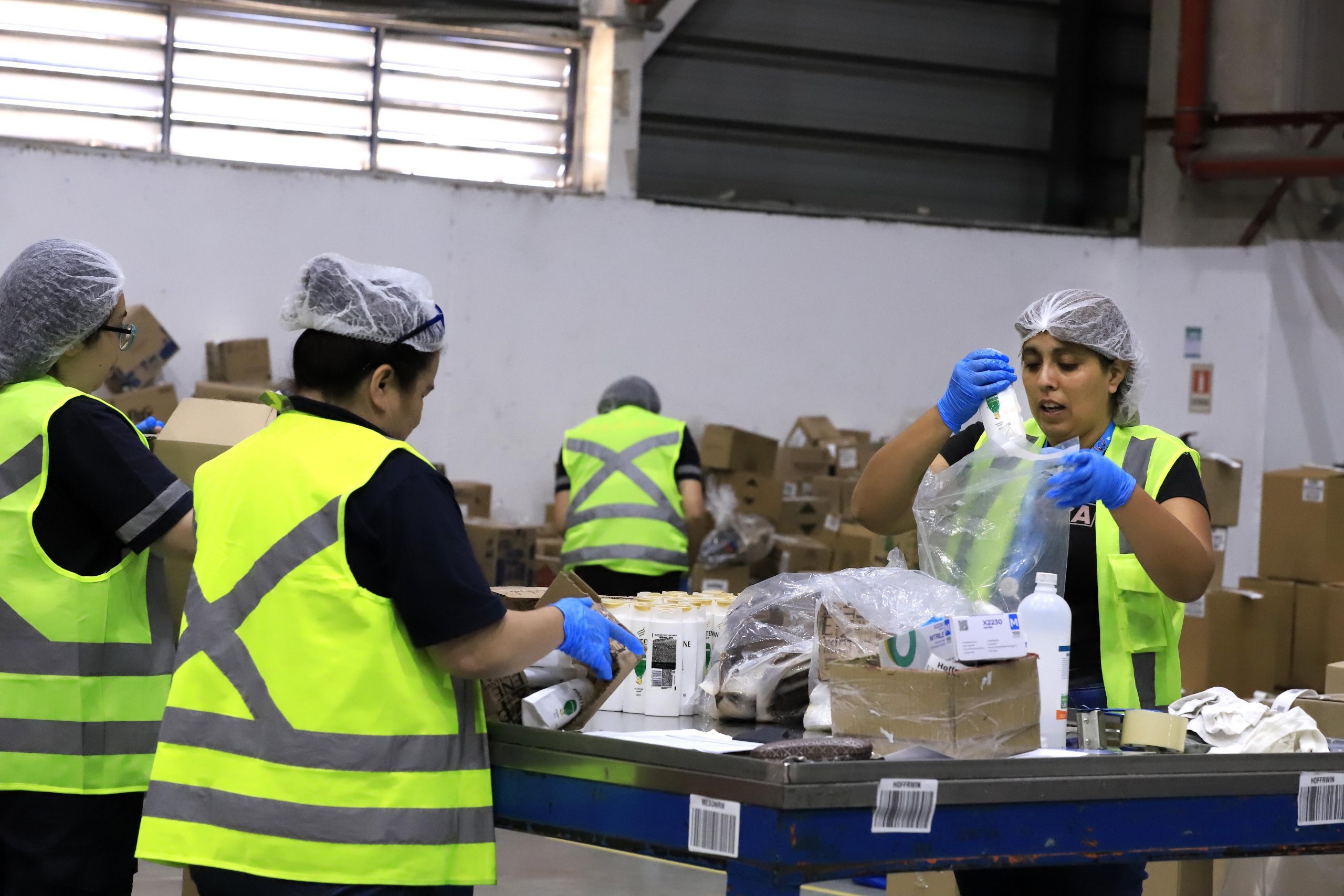
Martes 10, Febrero
El empleo regional crece impulsado por el comercio y la fuerza femenina
El análisis lo realiza el OLO a partir del último informe del Instituto Nacional de Estadísticas (INE) correspondiente al trimestre móvil octubre-diciembre
Saber más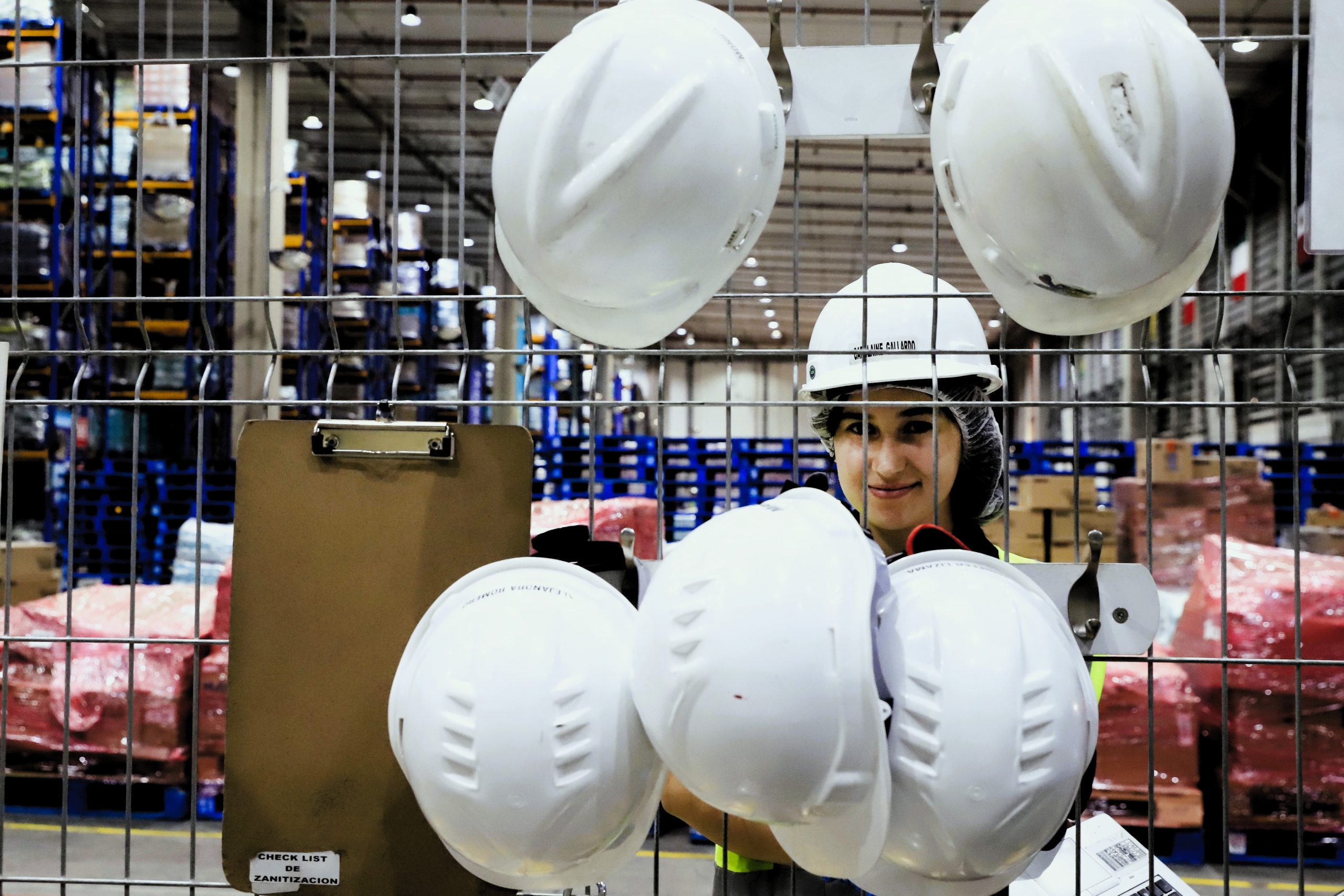
Lunes 2, Febrero
Observatorio Laboral advierte brechas críticas en el empleo juvenil
La tasa de ocupación de este segmento en la región se sitúa en un 40,5% para el trimestre septiembre-noviembre de 2025.
Saber más