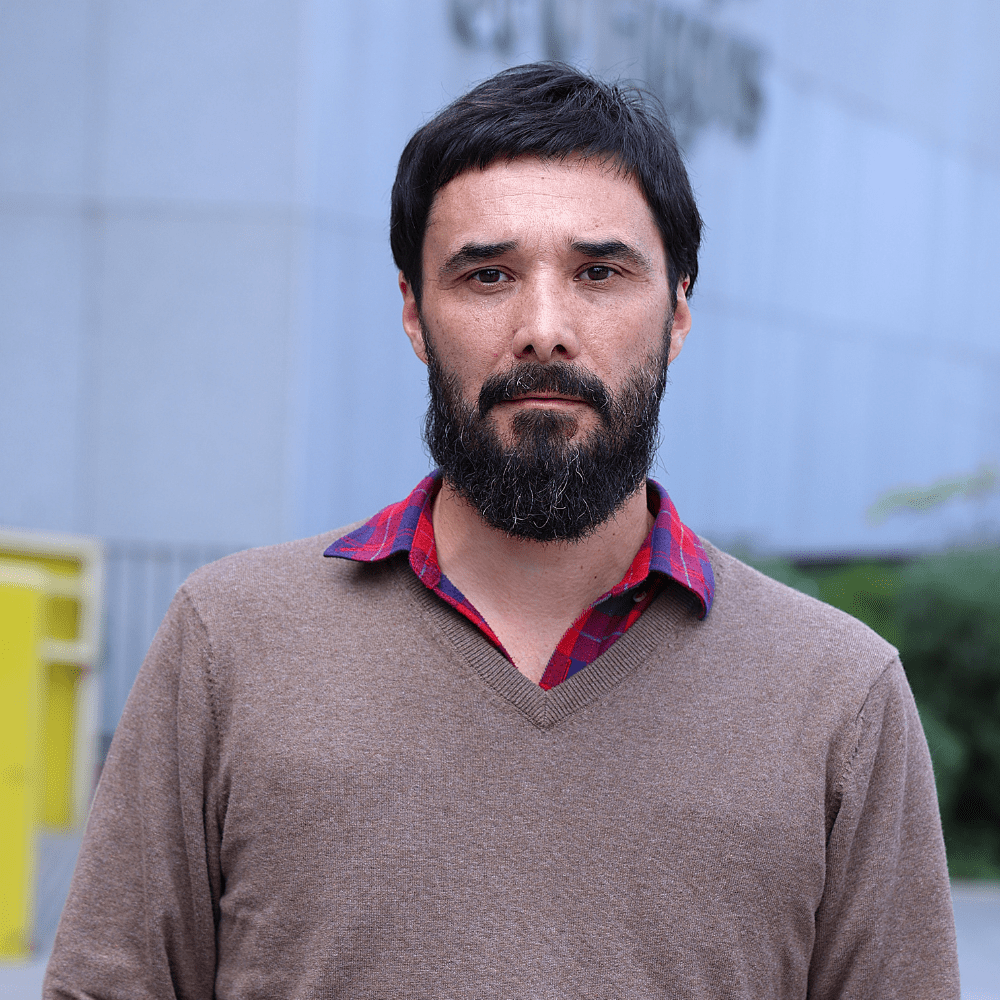
José Barrena Ruiz Profesor Asistente

José Barrena
Grado Académico

Doctor en Política Ambiental, Universidad de Wageningen (Países Bajos).

Título(s) Profesional

Licenciado en Ciencias Económicas, Universidad de Chile.

Descripción

José Barrena es investigador en ciencias sociales con formación en economía, desarrollo rural y sociología ambiental. En los últimos años, sus investigaciones se han enfocado en las relaciones entre movilidades, conservación de la naturaleza y disputas socioespaciales, con especial énfasis en la Patagonia chilena. Su trabajo aborda aspectos sociales vinculados a la creación de áreas protegidas, las dinámicas entre actores locales y globales, y las transformaciones territoriales en espacios marino-costeros.

José es actualmente co-investigador en el proyecto “Mundos de Algas: Explorando el surgimiento de transiciones marinas experimentales en Chile (FONDECYT-ANID 1230364 – 2023/2027).

17

3

3

1

3

  • REVISTA Sustainability Science
  • 2026

Energy transitions in peripheral territories: integrating Multi-level Perspective and Three Horizons approaches in Chilean Patagonia


• Trace Gale • José Barrena Ruiz • Luz Stella Cardona • Sebastian Ibarra

http://dx.doi.org/10.1007/s11625-025-01796-3

  • REVISTA Sustainability Science
  • 2026

Energy transitions in peripheral territories: integrating Multi-level Perspective and Three Horizons approaches in Chilean Patagonia


• Trace Gale • José Barrena Ruiz • Luz Stella Cardona • Sebastian Ibarra

http://dx.doi.org/10.1007/s11625-025-01796-3

  • REVISTA Frontiers in Human Dynamics
  • 2025

A South-North research agenda for cryotourism in a warming world


• Pamela Bachmann-Vargas • O. Cenk Demiroglu • Sebastián Ruiz Pereira • Dorothee Bohn • Marisol Vereda

http://dx.doi.org/10.3389/fhumd.2025.1520622

  • REVISTA Frontiers in Human Dynamics
  • 2025

A South-North research agenda for cryotourism in a warming world


• Pamela Bachmann-Vargas • O. Cenk Demiroglu • Sebastián Ruiz Pereira • Dorothee Bohn • Marisol Vereda

http://dx.doi.org/10.3389/fhumd.2025.1520622

  • REVISTA Maritime Studies
  • 2024

Pacifying seaweed: imagining docile objects for novel blue bioeconomies


• Sebastián Ureta • Patricio Flores • José Barrena Ruiz • Paula Miranda

http://dx.doi.org/10.1007/s40152-024-00380-2

  • REVISTA Geoforum
  • 2024

Countering salmon farming expansion: Network-making power in a nomadic marine space


• José Barrena Ruiz • Simon R. Bush • Machiel Lamers

http://dx.doi.org/10.1016/j.geoforum.2023.103923

  • REVISTA Revista Austral de Ciencias Sociales
  • 2024

Transformaciones Sociales en la Conservación Marina: El Caso del Área Marina Costera Protegida de Múltiples Usos Pitipalena- Añihue


• Emmanuelle Gotteland • José Barrena Ruiz • Sebastian Ibarra

http://dx.doi.org/10.4206/rev.austral.cienc.soc.2024.n47-01

  • REVISTA Maritime Studies
  • 2024

Pacifying seaweed: imagining docile objects for novel blue bioeconomies


• Sebastián Ureta • Patricio Flores • José Barrena Ruiz • Paula Miranda

http://dx.doi.org/10.1007/s40152-024-00380-2

  • REVISTA Geoforum
  • 2024

Countering salmon farming expansion: Network-making power in a nomadic marine space


• José Barrena Ruiz • Simon R. Bush • Machiel Lamers

http://dx.doi.org/10.1016/j.geoforum.2023.103923

  • REVISTA Revista Austral de Ciencias Sociales
  • 2024

Transformaciones Sociales en la Conservación Marina: El Caso del Área Marina Costera Protegida de Múltiples Usos Pitipalena- Añihue


• Emmanuelle Gotteland • José Barrena Ruiz • Sebastian Ibarra

http://dx.doi.org/10.4206/rev.austral.cienc.soc.2024.n47-01

  • REVISTA Environment and Planning C: Politics and Space
  • 2021

Contested mobilities in the maritory: Implications of boundary formation in a nomadic space


• José Barrena Ruiz • Alberto Harambour • Machiel Lamers • Simon R Bush

http://dx.doi.org/10.1177/23996544211016866

  • REVISTA Environment and Planning C: Politics and Space
  • 2021

Contested mobilities in the maritory: Implications of boundary formation in a nomadic space


• José Barrena Ruiz • Alberto Harambour • Machiel Lamers • Simon R Bush

http://dx.doi.org/10.1177/23996544211016866

  • REVISTA Agro Sur
  • 2020

Los conflictos del desarrollo en territorios y maritorios indígenas rurales


• José Barrena Ruiz • Maite Hernando Arrese

http://dx.doi.org/10.4206/agrosur.2020.v48n3-03

  • REVISTA Agro Sur
  • 2020

Los conflictos del desarrollo en territorios y maritorios indígenas rurales


• José Barrena Ruiz • Maite Hernando Arrese

http://dx.doi.org/10.4206/agrosur.2020.v48n3-03

  • REVISTA Mobilities
  • 2019

Governing nature-based tourism mobility in National Park Torres del Paine, Chilean Southern Patagonia


• José Barrena Ruiz • Machiel Lamers • Simon Bush • Gustavo Blanco Wells

http://dx.doi.org/10.1080/17450101.2019.1614335

  • REVISTA Historia Crítica
  • 2019

Barbarie o justicia en la Patagonia occidental: las violencias coloniales en el ocaso del pueblo kawésqar, finales del siglo XIX e inicios del siglo XX


• Alberto Harambour • José Barrena Ruiz

http://dx.doi.org/10.7440/histcrit71.2019.02

  • REVISTA Mobilities
  • 2019

Governing nature-based tourism mobility in National Park Torres del Paine, Chilean Southern Patagonia


• José Barrena Ruiz • Machiel Lamers • Simon Bush • Gustavo Blanco Wells

http://dx.doi.org/10.1080/17450101.2019.1614335

  • REVISTA Historia Crítica
  • 2019

Barbarie o justicia en la Patagonia occidental: las violencias coloniales en el ocaso del pueblo kawésqar, finales del siglo XIX e inicios del siglo XX


• Alberto Harambour • José Barrena Ruiz

http://dx.doi.org/10.7440/histcrit71.2019.02

  • REVISTA International Journal of the Commons
  • 2018

Self-organizing processes in urban green commons. The case of the Angachilla wetland, Valdivia-Chile


• Heidy Correa • Gustavo Blanco-Wells • José Barrena Ruiz • Alberto Tacón

http://dx.doi.org/10.18352/ijc.856

  • REVISTA International Journal of the Commons
  • 2018

Self-organizing processes in urban green commons. The case of the Angachilla wetland, Valdivia-Chile


• Heidy Correa • Gustavo Blanco-Wells • José Barrena Ruiz • Alberto Tacón

http://dx.doi.org/10.18352/ijc.856

  • REVISTA Bosque (Valdivia)
  • 2016

Antecedentes históricos sobre el Complejo Forestal y Maderero Panguipulli, provincia de Valdivia, Centro-sur de Chile


• José Barrena Ruiz • Maite Hernando Arrese • Fernanda Rojas Marchini

http://dx.doi.org/10.4067/s0717-92002016000300004

  • REVISTA Bosque (Valdivia)
  • 2016

Antecedentes históricos sobre el Complejo Forestal y Maderero Panguipulli, provincia de Valdivia, Centro-sur de Chile


• José Barrena Ruiz • Maite Hernando Arrese • Fernanda Rojas Marchini

http://dx.doi.org/10.4067/s0717-92002016000300004

  • REVISTA Ecological Indicators
  • 2014

A mapping approach to assess intangible cultural ecosystem services: The case of agriculture heritage in Southern Chile


• Laura Nahuelhual • Alejandra Carmona • Pedro Laterra • José Barrena Ruiz • Mauricio Aguayo

http://dx.doi.org/10.1016/j.ecolind.2014.01.005

  • REVISTA Ecological Indicators
  • 2014

A mapping approach to assess intangible cultural ecosystem services: The case of agriculture heritage in Southern Chile


• Laura Nahuelhual • Alejandra Carmona • Pedro Laterra • José Barrena Ruiz • Mauricio Aguayo

http://dx.doi.org/10.1016/j.ecolind.2014.01.005

  • REVISTA Ecosystem services
  • 2014

Valuing cultural ecosystem services: Agricultural heritage in Chiloé island, southern Chile


• José Barrena Ruiz • Laura Nahuelhual • Andrea Báez • Ignacio Schiappacasse • Claudia Cerda

http://dx.doi.org/10.1016/j.ecoser.2013.12.005

  • REVISTA World Development
  • 2014

Do Sanitary, Phytosanitary, and Quality-related Standards Affect International Trade? Evidence from Chilean Fruit Exports


• Oscar Melo • Alejandra Engler • Laura Nahuehual • Gabriela Cofre • José Barrena Ruiz

http://dx.doi.org/10.1016/j.worlddev.2013.10.005

  • REVISTA Ecosystem services
  • 2014

Valuing cultural ecosystem services: Agricultural heritage in Chiloé island, southern Chile


• José Barrena Ruiz • Laura Nahuelhual • Andrea Báez • Ignacio Schiappacasse • Claudia Cerda

http://dx.doi.org/10.1016/j.ecoser.2013.12.005

  • REVISTA World Development
  • 2014

Do Sanitary, Phytosanitary, and Quality-related Standards Affect International Trade? Evidence from Chilean Fruit Exports


• Oscar Melo • Alejandra Engler • Laura Nahuehual • Gabriela Cofre • José Barrena Ruiz

http://dx.doi.org/10.1016/j.worlddev.2013.10.005

  • REVISTA Spanish Journal of Agricultural Research
  • 2013

Heterogeneity of farms entering export supply chains: the case of fruit growers from central-south Chile


• José Barrena Ruiz • Laura Nahuelhual • Alejandra Engler • Rodrigo Echeverría • Gabriela Cofre

http://dx.doi.org/10.5424/sjar/2013112-3469

  • REVISTA Spanish Journal of Agricultural Research
  • 2013

Heterogeneity of farms entering export supply chains: the case of fruit growers from central-south Chile


• José Barrena Ruiz • Laura Nahuelhual • Alejandra Engler • Rodrigo Echeverría • Gabriela Cofre

http://dx.doi.org/10.5424/sjar/2013112-3469

  • REVISTA Food Policy
  • 2012

How far from harmonization are sanitary, phytosanitary and quality-related standards? An exporter’s perception approach


• Alejandra Engler • Laura Nahuelhual • Gabriela Cofre • José Barrena Ruiz

http://dx.doi.org/10.1016/j.foodpol.2011.12.003

  • REVISTA Ciencia e investigación agraria
  • 2012

A characterization of Chilean farmers based on their market-production orientation


• Rodrigo Echeverría • Víctor Moreira • José Barrena Ruiz • Munisamy Gopinath

http://dx.doi.org/10.4067/s0718-16202012000200002

  • REVISTA Food Policy
  • 2012

How far from harmonization are sanitary, phytosanitary and quality-related standards? An exporter’s perception approach


• Alejandra Engler • Laura Nahuelhual • Gabriela Cofre • José Barrena Ruiz

http://dx.doi.org/10.1016/j.foodpol.2011.12.003

  • REVISTA Ciencia e investigación agraria
  • 2012

A characterization of Chilean farmers based on their market-production orientation


• Rodrigo Echeverría • Víctor Moreira • José Barrena Ruiz • Munisamy Gopinath

http://dx.doi.org/10.4067/s0718-16202012000200002

  • 123036
  • Abril 2023 - Abril 2027
En EjecuciónAgencia Nacional de Investigación y Desarrollo - ANID

Worlds of Algae: Exploring the emergence of marine transition experiments in Chile

[vc_section el_class="container mx-auto align-items-center circle--pattern" css=".vc_custom_1648956589196{padding-top: 3rem !important;}"][vc_row el_class="pb-5"][vc_column][vc_wp_custommenu nav_menu="6"][uoh_breadcrumb_component automatic_breadcrumb="true"][uoh_title_component title_dropdown="big" title_decorator="true"]{{title}}[/uoh_title_component][vc_column_text css=""]One of the most urgent socio-environmental crises facing humanity is the massive deterioration of earth's ecosystems. The scale of this process is so vast that there is talk that we are living through the sixth mass extinction of species, leaving no ecosystem worldwide unaffected. Although when thinking about these processes we tend to concentrate on land-based ecosystems, marine ecosystems are also experiencing massive degradation processes. Human-induced phenomena such as ocean warming, extensive pollution, acidification and deoxygenation, are causing ecological struggles everywhere. In parallel, the relentless extraction and ubiquitous pollution associated with industries such as fishing and aquaculture have also become a leading cause of marine environmental degradation. Given its extensive coastline and the massive scale of its fishing and aquaculture industries, Chile is very much at the center of such processes of anthropogenic marine degradation. Such decay does not only affect the nonhuman component of marine ecosystems – with some studies estimating that 2/3 of the country’s fisheries have been heavily affected – but also the human groups depending on them, especially hundreds of low-income fishing communities all over the country. The recognition of this degradation is not new, motivating since mid-1990s different kinds of public and private interventions to turn marine-based industries towards sustainability. So far, these interventions have been mostly ineffective, mainly because they have taken an incremental approach to the issue, not really challenging the roots of the systems of extractivism that allow ever-growing levels of environmental damage and injustice. The leading hypothesis of this research project is that a new kind of transition project is slowly emerging in the Chilean marine productive sector. Following the relevant literature on sustainability transitions in the fields of political ecology, science and technology studies (STS) and multispecies studies, this project will see these marine transition experiments (MTE) as aiming to enhance the sustainability of the marine productive sector through an experimental redefinition of the identities and relationships among some of its leading components. In particular, the project will focus on three components these experiments usually aim to redefine (with variable intensities): (1) its social component, towards a more nuanced understanding of the socioeconomic, political and cultural complexities involved in transition processes, (2) its epistemic component, towards a holistic approach to knowledge production and circulation, and (3) its nonhuman component, towards a commitment to respect and protect the involved nonhuman biological entities. In order to empirically explore the specific contours and challenges that such MTEs are facing in Chile this research project will engage with experiments focused on a particularly central component of marine ecologies: macroalgae. Although a key component of most marine ecosystems in the country, an ongoing boom on its extraction – that has turned Chile into one of its leading exporters worldwide – has caused massive damage to several key macroalgae ecosystems, and the multiple beings that depend on them. Reacting to this situation, in recent years a series of initiatives much closer to the MTE model have emerged on this area, projects that can be divided on two main types. First, there are MTE focused on domestication, referring to initiatives that aim at replacing the direct extraction of macroalgae from the seabed by its careful and continual cultivation and harvesting. Second, and reacting to the current model based on the export of macroalgae as raw material, there are MTE focused on potentiation, or initiatives aiming at locally processing macroalgae in order to potentiate one particular strain or process, turning it into elaborated products or components of technical processes. The general objective of this research project will be to explore using a transdisciplinary social science approach the emergence of MTEs centered in the macroalgae industry in Chile, putting a specific focus on the barriers and frictions they are currently facing and exploring novel ways to enhance their potential. In empirical terms, this exploration will be based on the development of case studies of ongoing domestication and potentiation MTEs. In each of these cases, multispecies ethnography will be mixed with action-research initiatives, so as not only to describe and analyze in a dense transdisciplinary way the issues and opportunities arising from these initiatives, but also to collaborate with multiple publics on sketching possible ways on which they could be strengthened. Selecting concrete case studies in different locations at a national level, the project will produce and disseminate highly innovative knowledge regarding the barriers and challenges faced by ongoing MTEs, with the final aim of contributing to the urgent need to move towards more sustainable productive engagements with marine ecosystems.[/vc_column_text][/vc_column][/vc_row][/vc_section][vc_section css=".vc_custom_1649209804184{background-color: #f6faff !important;}" el_class="p-md-0 pt-md-5"][vc_row el_class="container mx-auto align-items-center p-md-0 pt-5"][vc_column el_class="p-0"][/vc_column][/vc_row][/vc_section][vc_section css=".vc_custom_1649210787516{background-color: #f6faff !important;}" el_class="p-md-0 pt-md-5 pb-md-5"][vc_row el_class="container mx-auto align-items-center"][vc_column][/vc_column][/vc_row][/vc_section]
Co-Investigador/a
  • 123036
  • Abril 2023 - Abril 2027
En EjecuciónAgencia Nacional de Investigación y Desarrollo - ANID

Worlds of Algae: Exploring the emergence of marine transition experiments in Chile

[vc_section el_class="container mx-auto align-items-center circle--pattern" css=".vc_custom_1648956589196{padding-top: 3rem !important;}"][vc_row el_class="pb-5"][vc_column][vc_wp_custommenu nav_menu="6"][uoh_breadcrumb_component automatic_breadcrumb="true"][uoh_title_component title_dropdown="big" title_decorator="true"]{{title}}[/uoh_title_component][vc_column_text css=""]One of the most urgent socio-environmental crises facing humanity is the massive deterioration of earth's ecosystems. The scale of this process is so vast that there is talk that we are living through the sixth mass extinction of species, leaving no ecosystem worldwide unaffected. Although when thinking about these processes we tend to concentrate on land-based ecosystems, marine ecosystems are also experiencing massive degradation processes. Human-induced phenomena such as ocean warming, extensive pollution, acidification and deoxygenation, are causing ecological struggles everywhere. In parallel, the relentless extraction and ubiquitous pollution associated with industries such as fishing and aquaculture have also become a leading cause of marine environmental degradation. Given its extensive coastline and the massive scale of its fishing and aquaculture industries, Chile is very much at the center of such processes of anthropogenic marine degradation. Such decay does not only affect the nonhuman component of marine ecosystems – with some studies estimating that 2/3 of the country’s fisheries have been heavily affected – but also the human groups depending on them, especially hundreds of low-income fishing communities all over the country. The recognition of this degradation is not new, motivating since mid-1990s different kinds of public and private interventions to turn marine-based industries towards sustainability. So far, these interventions have been mostly ineffective, mainly because they have taken an incremental approach to the issue, not really challenging the roots of the systems of extractivism that allow ever-growing levels of environmental damage and injustice. The leading hypothesis of this research project is that a new kind of transition project is slowly emerging in the Chilean marine productive sector. Following the relevant literature on sustainability transitions in the fields of political ecology, science and technology studies (STS) and multispecies studies, this project will see these marine transition experiments (MTE) as aiming to enhance the sustainability of the marine productive sector through an experimental redefinition of the identities and relationships among some of its leading components. In particular, the project will focus on three components these experiments usually aim to redefine (with variable intensities): (1) its social component, towards a more nuanced understanding of the socioeconomic, political and cultural complexities involved in transition processes, (2) its epistemic component, towards a holistic approach to knowledge production and circulation, and (3) its nonhuman component, towards a commitment to respect and protect the involved nonhuman biological entities. In order to empirically explore the specific contours and challenges that such MTEs are facing in Chile this research project will engage with experiments focused on a particularly central component of marine ecologies: macroalgae. Although a key component of most marine ecosystems in the country, an ongoing boom on its extraction – that has turned Chile into one of its leading exporters worldwide – has caused massive damage to several key macroalgae ecosystems, and the multiple beings that depend on them. Reacting to this situation, in recent years a series of initiatives much closer to the MTE model have emerged on this area, projects that can be divided on two main types. First, there are MTE focused on domestication, referring to initiatives that aim at replacing the direct extraction of macroalgae from the seabed by its careful and continual cultivation and harvesting. Second, and reacting to the current model based on the export of macroalgae as raw material, there are MTE focused on potentiation, or initiatives aiming at locally processing macroalgae in order to potentiate one particular strain or process, turning it into elaborated products or components of technical processes. The general objective of this research project will be to explore using a transdisciplinary social science approach the emergence of MTEs centered in the macroalgae industry in Chile, putting a specific focus on the barriers and frictions they are currently facing and exploring novel ways to enhance their potential. In empirical terms, this exploration will be based on the development of case studies of ongoing domestication and potentiation MTEs. In each of these cases, multispecies ethnography will be mixed with action-research initiatives, so as not only to describe and analyze in a dense transdisciplinary way the issues and opportunities arising from these initiatives, but also to collaborate with multiple publics on sketching possible ways on which they could be strengthened. Selecting concrete case studies in different locations at a national level, the project will produce and disseminate highly innovative knowledge regarding the barriers and challenges faced by ongoing MTEs, with the final aim of contributing to the urgent need to move towards more sustainable productive engagements with marine ecosystems.[/vc_column_text][/vc_column][/vc_row][/vc_section][vc_section css=".vc_custom_1649209804184{background-color: #f6faff !important;}" el_class="p-md-0 pt-md-5"][vc_row el_class="container mx-auto align-items-center p-md-0 pt-5"][vc_column el_class="p-0"][/vc_column][/vc_row][/vc_section][vc_section css=".vc_custom_1649210787516{background-color: #f6faff !important;}" el_class="p-md-0 pt-md-5 pb-md-5"][vc_row el_class="container mx-auto align-items-center"][vc_column][/vc_column][/vc_row][/vc_section]
Co-Investigador/a
  • Febrero 2022 - Diciembre 2023
FinalizadoSTINT (Swedish Foundation for International Cooperation in Research and Higher Education)

Cryotourism in a warming world: Co-exploring glacier and snow-based tourism development in southern and northern peripheries

[vc_section el_class="container mx-auto align-items-center circle--pattern" css=".vc_custom_1648956589196{padding-top: 3rem !important;}"][vc_row el_class="pb-5"][vc_column][vc_wp_custommenu nav_menu="6"][uoh_breadcrumb_component automatic_breadcrumb="true"][uoh_title_component title_dropdown="big" title_decorator="true"]{{title}}[/uoh_title_component][vc_column_text css=""]El proyecto examina las transformaciones del turismo basado en nieve y glaciares en un contexto de cambio climático acelerado. A partir de un enfoque comparativo entre periferias del norte y del sur global, la investigación analiza cómo el retroceso de criósferas está reconfigurando las oportunidades, prácticas y narrativas del turismo en territorios dependientes de estos recursos. El proyecto combina perspectivas de la geografía humana, los estudios del turismo y la sostenibilidad para co-explorar, junto a actores locales y académicos, nuevas trayectorias de desarrollo turístico frente a escenarios de incertidumbre ambiental. Metodológicamente, se basa en el intercambio internacional, la colaboración interdisciplinaria y la generación conjunta de conocimiento, con el objetivo de comprender las tensiones entre adaptación, conservación y desarrollo económico. Los resultados buscan aportar a debates teóricos sobre turismo en contextos de cambio global, así como a la formulación de estrategias más resilientes e inclusivas para territorios periféricos afectados por la pérdida de hielo y nieve.[/vc_column_text][/vc_column][/vc_row][/vc_section][vc_section css=".vc_custom_1649209804184{background-color: #f6faff !important;}" el_class="p-md-0 pt-md-5"][vc_row el_class="container mx-auto align-items-center p-md-0 pt-5"][vc_column el_class="p-0"][/vc_column][/vc_row][/vc_section][vc_section css=".vc_custom_1649210787516{background-color: #f6faff !important;}" el_class="p-md-0 pt-md-5 pb-md-5"][vc_row el_class="container mx-auto align-items-center"][vc_column][/vc_column][/vc_row][/vc_section]
Co-Investigador/a
  • Febrero 2022 - Diciembre 2023
FinalizadoSTINT (Swedish Foundation for International Cooperation in Research and Higher Education)

Cryotourism in a warming world: Co-exploring glacier and snow-based tourism development in southern and northern peripheries

[vc_section el_class="container mx-auto align-items-center circle--pattern" css=".vc_custom_1648956589196{padding-top: 3rem !important;}"][vc_row el_class="pb-5"][vc_column][vc_wp_custommenu nav_menu="6"][uoh_breadcrumb_component automatic_breadcrumb="true"][uoh_title_component title_dropdown="big" title_decorator="true"]{{title}}[/uoh_title_component][vc_column_text css=""]El proyecto examina las transformaciones del turismo basado en nieve y glaciares en un contexto de cambio climático acelerado. A partir de un enfoque comparativo entre periferias del norte y del sur global, la investigación analiza cómo el retroceso de criósferas está reconfigurando las oportunidades, prácticas y narrativas del turismo en territorios dependientes de estos recursos. El proyecto combina perspectivas de la geografía humana, los estudios del turismo y la sostenibilidad para co-explorar, junto a actores locales y académicos, nuevas trayectorias de desarrollo turístico frente a escenarios de incertidumbre ambiental. Metodológicamente, se basa en el intercambio internacional, la colaboración interdisciplinaria y la generación conjunta de conocimiento, con el objetivo de comprender las tensiones entre adaptación, conservación y desarrollo económico. Los resultados buscan aportar a debates teóricos sobre turismo en contextos de cambio global, así como a la formulación de estrategias más resilientes e inclusivas para territorios periféricos afectados por la pérdida de hielo y nieve.[/vc_column_text][/vc_column][/vc_row][/vc_section][vc_section css=".vc_custom_1649209804184{background-color: #f6faff !important;}" el_class="p-md-0 pt-md-5"][vc_row el_class="container mx-auto align-items-center p-md-0 pt-5"][vc_column el_class="p-0"][/vc_column][/vc_row][/vc_section][vc_section css=".vc_custom_1649210787516{background-color: #f6faff !important;}" el_class="p-md-0 pt-md-5 pb-md-5"][vc_row el_class="container mx-auto align-items-center"][vc_column][/vc_column][/vc_row][/vc_section]
Co-Investigador/a
  • 15150003
  • Octubre 2015 - Octubre 2025
FinalizadoAgencia Nacional de Investigación y Desarrollo - ANID

Center Research on Marine Ecosystems of High Latitudes – IDEAL

[vc_section el_class="container mx-auto align-items-center circle--pattern" css=".vc_custom_1648956589196{padding-top: 3rem !important;}"][vc_row el_class="pb-5"][vc_column][vc_wp_custommenu nav_menu="6"][uoh_breadcrumb_component automatic_breadcrumb="true"][uoh_title_component title_dropdown="big" title_decorator="true"]{{title}}[/uoh_title_component][vc_column_text css=""]El Centro IDEAL desarrolla investigación interdisciplinaria que integra ciencias naturales y sociales para generar conocimiento científico relevante para la conservación y gobernanza de los sistemas marinos australes. Sus líneas de trabajo (o dimensiones) se estructuran en torno a: Procesos físicos y cambio climático Analiza la variabilidad ambiental (temperatura, circulación oceánica, hielo marino) y sus efectos sobre los ecosistemas. Incluye fenómenos como el calentamiento global y la acidificación del océano. Ecosistemas, biodiversidad y funcionamiento ecológico Estudia la estructura y dinámica de los ecosistemas marinos, desde microorganismos hasta especies emblemáticas, abordando su resiliencia, productividad e interacciones tróficas. Microbiología y biogeoquímica Examina el rol de microorganismos en los ciclos de nutrientes y en el funcionamiento del océano austral, incluyendo su respuesta a cambios ambientales. Dimensión humana, usos y gobernanza Aborda la relación entre sociedad y ecosistemas marinos, incluyendo pesca, acuicultura, turismo y conservación, así como los marcos institucionales y de política pública en contextos subantárticos y antárticos. Integración y modelación de sistemas socio-ecológicos Desarrolla enfoques integrados para comprender los sistemas acoplados humano-naturaleza, apoyando la toma de decisiones mediante modelos y escenarios.[/vc_column_text][/vc_column][/vc_row][/vc_section][vc_section css=".vc_custom_1649209804184{background-color: #f6faff !important;}" el_class="p-md-0 pt-md-5"][vc_row el_class="container mx-auto align-items-center p-md-0 pt-5"][vc_column el_class="p-0"][/vc_column][/vc_row][/vc_section][vc_section css=".vc_custom_1649210787516{background-color: #f6faff !important;}" el_class="p-md-0 pt-md-5 pb-md-5"][vc_row el_class="container mx-auto align-items-center"][vc_column][/vc_column][/vc_row][/vc_section]
Co-Investigador/a
  • 15150003
  • Octubre 2015 - Octubre 2025
FinalizadoAgencia Nacional de Investigación y Desarrollo - ANID

Center Research on Marine Ecosystems of High Latitudes – IDEAL

[vc_section el_class="container mx-auto align-items-center circle--pattern" css=".vc_custom_1648956589196{padding-top: 3rem !important;}"][vc_row el_class="pb-5"][vc_column][vc_wp_custommenu nav_menu="6"][uoh_breadcrumb_component automatic_breadcrumb="true"][uoh_title_component title_dropdown="big" title_decorator="true"]{{title}}[/uoh_title_component][vc_column_text css=""]El Centro IDEAL desarrolla investigación interdisciplinaria que integra ciencias naturales y sociales para generar conocimiento científico relevante para la conservación y gobernanza de los sistemas marinos australes. Sus líneas de trabajo (o dimensiones) se estructuran en torno a: Procesos físicos y cambio climático Analiza la variabilidad ambiental (temperatura, circulación oceánica, hielo marino) y sus efectos sobre los ecosistemas. Incluye fenómenos como el calentamiento global y la acidificación del océano. Ecosistemas, biodiversidad y funcionamiento ecológico Estudia la estructura y dinámica de los ecosistemas marinos, desde microorganismos hasta especies emblemáticas, abordando su resiliencia, productividad e interacciones tróficas. Microbiología y biogeoquímica Examina el rol de microorganismos en los ciclos de nutrientes y en el funcionamiento del océano austral, incluyendo su respuesta a cambios ambientales. Dimensión humana, usos y gobernanza Aborda la relación entre sociedad y ecosistemas marinos, incluyendo pesca, acuicultura, turismo y conservación, así como los marcos institucionales y de política pública en contextos subantárticos y antárticos. Integración y modelación de sistemas socio-ecológicos Desarrolla enfoques integrados para comprender los sistemas acoplados humano-naturaleza, apoyando la toma de decisiones mediante modelos y escenarios.[/vc_column_text][/vc_column][/vc_row][/vc_section][vc_section css=".vc_custom_1649209804184{background-color: #f6faff !important;}" el_class="p-md-0 pt-md-5"][vc_row el_class="container mx-auto align-items-center p-md-0 pt-5"][vc_column el_class="p-0"][/vc_column][/vc_row][/vc_section][vc_section css=".vc_custom_1649210787516{background-color: #f6faff !important;}" el_class="p-md-0 pt-md-5 pb-md-5"][vc_row el_class="container mx-auto align-items-center"][vc_column][/vc_column][/vc_row][/vc_section]
Co-Investigador/a
  • Países Bajos - Wageningen

Territorialisation and Counter-territorialisation at the Frontier. Spatial Boundaries and Mobilities in Chilean Southern Patagonia

ISBN
N° de Páginas
165
Idioma
Inglés
Editorial
Wageningen University
Autores
José Barrena Ruiz
  • Países Bajos - Wageningen

Territorialisation and Counter-territorialisation at the Frontier. Spatial Boundaries and Mobilities in Chilean Southern Patagonia

ISBN
N° de Páginas
165
Idioma
Inglés
Editorial
Wageningen University
Autores
José Barrena Ruiz
  • Chile - Valdivia

VALORACIÓN DE LOS SERVICIOS ECOSISTÉMICOS CULTURALES: ESTIMACIÓN DE LA DISPOSICIÓN A PAGAR POR LA CONSERVACIÓN DEL PATRIMONIO AGRÍCOLA DE CHILOÉ

ISBN
N° de Páginas
51
Idioma
Español
Editorial
Universidad Austral de Chile
Autores
José Barrena Ruiz
  • Chile - Valdivia

VALORACIÓN DE LOS SERVICIOS ECOSISTÉMICOS CULTURALES: ESTIMACIÓN DE LA DISPOSICIÓN A PAGAR POR LA CONSERVACIÓN DEL PATRIMONIO AGRÍCOLA DE CHILOÉ

ISBN
N° de Páginas
51
Idioma
Español
Editorial
Universidad Austral de Chile
Autores
José Barrena Ruiz
  • Chile - Santiago

Estudio de economía alternativa. Las comunidades aymaras del norte de Chile

ISBN
N° de Páginas
Idioma
Español
Editorial
Universidad de Chile
Autores
José Barrena Ruiz
  • Chile - Santiago

Estudio de economía alternativa. Las comunidades aymaras del norte de Chile

ISBN
N° de Páginas
Idioma
Español
Editorial
Universidad de Chile
Autores
José Barrena Ruiz
  • La Región de Magallanes y Antártica Chilena frente al cambio global
  • 2020

Las disputas sobre el maritorio austral y la revitalización de las identidades canoeras

ISBN
978-956-390-103-0
Páginas
Désde la página , hasta la página
Idioma
Español
Editorial
Universidad Austral de Chile
Editores
Autores
Gustavo Blanco-Wells, Alberto Harambour, José Barrena Ruiz, María Amalia Mellado
  • La Región de Magallanes y Antártica Chilena frente al cambio global
  • 2020

Las disputas sobre el maritorio austral y la revitalización de las identidades canoeras

ISBN
978-956-390-103-0
Páginas
Désde la página , hasta la página
Idioma
Español
Editorial
Universidad Austral de Chile
Editores
Autores
Gustavo Blanco-Wells, Alberto Harambour, José Barrena Ruiz, María Amalia Mellado

    Informe Fase 1 y 4: Caracterización Régimen Socio-Técnico del Sistema Energético de la Región de Aysén

    Descripción
    Tipo
    Autores
    José Barrena Ruiz, Sebastian Ibarra, Clara Irarrázabal, Andrés Monckeberg, Trace Gale, Luz Cardona

      Informe Fase 1 y 4: Caracterización Régimen Socio-Técnico del Sistema Energético de la Región de Aysén

      Descripción
      Tipo
      Autores
      José Barrena Ruiz, Sebastian Ibarra, Clara Irarrázabal, Andrés Monckeberg, Trace Gale, Luz Cardona

        Informe Final Segundo Ciclo Proyecto Semilla Bosque Modelo Panguipulli Tomo II: Delimitación del Paisaje

        Descripción
        Tipo
        Autores
        Maite Hernando Arrese, José Barrena Ruiz

          Informe Final Segundo Ciclo Proyecto Semilla Bosque Modelo Panguipulli Tomo II: Delimitación del Paisaje

          Descripción
          Tipo
          Autores
          Maite Hernando Arrese, José Barrena Ruiz

            Indicadores de Servicios Ecosistémicos. Una Revisión y Análisis de su Calidad

            Descripción
            Tipo
            Autores
            Laura Nahuelhual, Pedro Laterra, José Barrena Ruiz

              Indicadores de Servicios Ecosistémicos. Una Revisión y Análisis de su Calidad

              Descripción
              Tipo
              Autores
              Laura Nahuelhual, Pedro Laterra, José Barrena Ruiz